Section 04 · Features
The outdoor bar carts worth the money
Most carts sold for a patio are indoor carts with a patio photograph. Five that are actually built for it, compared on published figures.
We earn a commission if you buy through our links, at no extra cost to you. We have not tested these carts. Here is what we did instead.
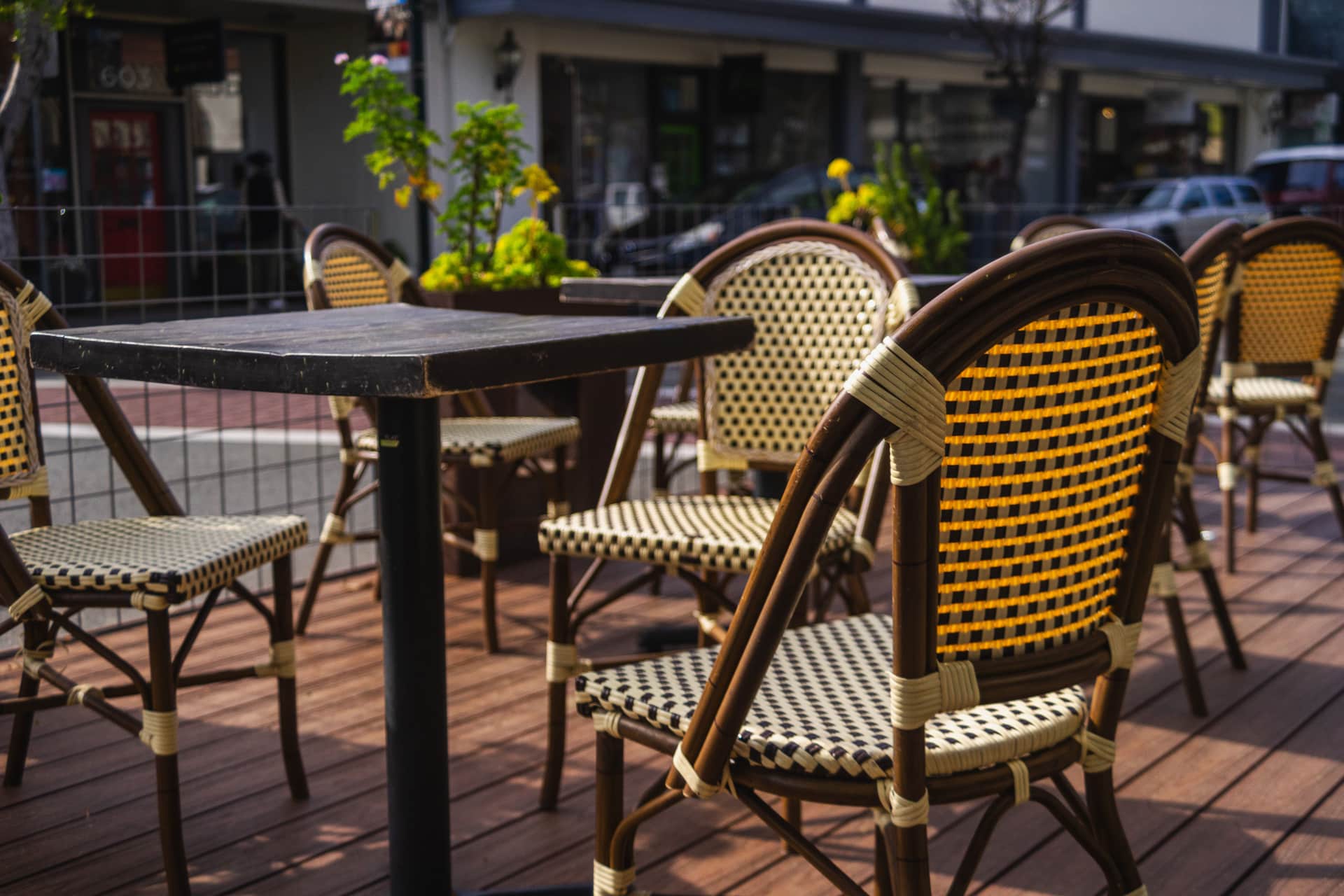
The shortlist
Quick picks
Tap a row for the full write-up. The price button opens Amazon.
| # | Product | Best for | Price |
|---|---|---|---|
| 01 | 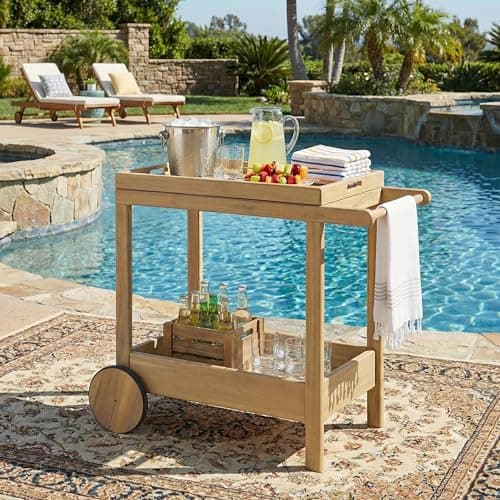 Christopher Knight Home Sara Acacia Outdoor Bar Cart (378245) Acacia through the frame and the shelves, 120 lb published capacity, 28.2 lb, and a removable tray on top. | Timber that stays out | |
| 02 | 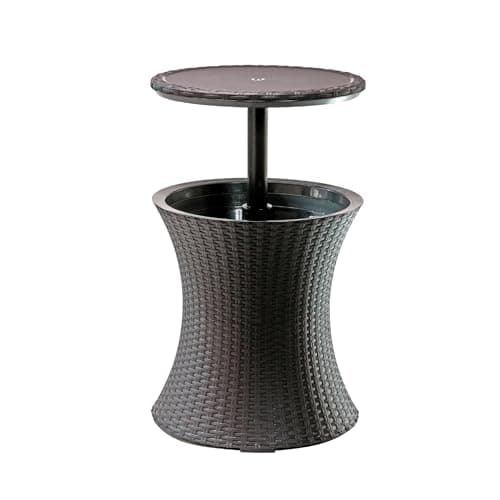 Keter Pacific Cool Bar Not really a cart — a resin side table with a 7.5 gallon insulated cooler under a lift-up lid, on a 19.5 inch square footprint. | Ice you do not carry | |
| 03 | 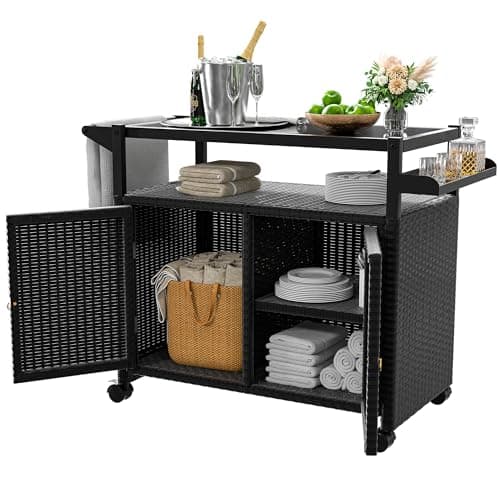 Xilingol Outdoor Wicker Bar Cart with Cabinet The one on this page that is really an outdoor sideboard on wheels: 44.5 inches long with a 54 gallon closed cabinet under a tempered glass top. | Closed patio storage | |
| 04 | 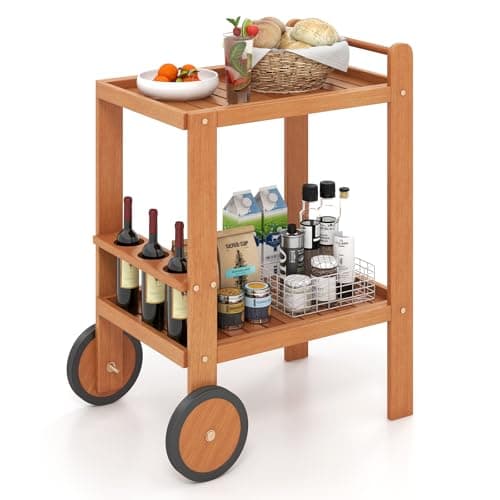 Tangkula 2-Tier Wood Bar Cart Rubberwood with a teak oil finish and a slatted deck that drains, which is the one specification on this page that matters outdoors. | Patios and poolsides | |
| 05 | 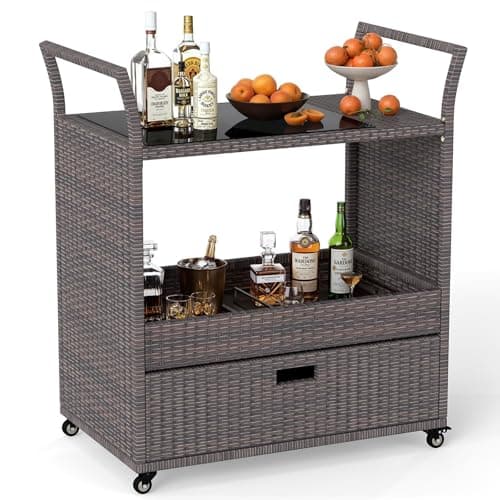 Tangkula Outdoor Rolling Wicker Bar Cart (AM12364HM) PE wicker over a metal frame with a tempered glass top and, unusually, a real drawer. | A drawer outdoors |
#ad · We earn a commission on qualifying Amazon purchases, at no extra cost to you. Prices come from Amazon and change.
The failure mode for an outdoor bar cart is not dramatic. Nothing collapses. What happens is that a board shelf takes one heavy dew, the moisture gets into a cut edge on the underside where nobody sealed it, and by the second summer the front lip of the shelf has swollen into a soft ridge that will not go back down. The cart still works. It just looks wrong forever.
So this page is really about materials, and the shortlist is short because most carts sold with the word outdoor in the title are indoor carts photographed on a deck. The pick is the Christopher Knight Home Sara: acacia through the frame and the shelves, 120 lb published capacity, 28.2 lb, with a top tray that lifts off. Acacia is what patio furniture is normally made from, which is the whole point.
The four materials, and what weather does to each
Acacia and other hardwoods. Real timber, which is what the furniture on most decks is made from. It handles rain, and it handles being scrubbed. Left untreated it goes silver-gray within a season — some people want exactly that and some are surprised by it — and keeping the warm brown means oiling it once or twice a year. That is the maintenance an outdoor wood cart costs.
Rubberwood with an oil finish. Also real timber, denser than it sounds, and the usual material behind an affordable wood cart that genuinely can go outside. Its weak point is the joints rather than the surface: water that sits where two pieces meet has nowhere to evaporate to. Slatted shelves help enormously here, because they drain instead of holding a puddle.
Resin. Plastic, and completely indifferent to weather. No oiling, no rust, no swelling, nothing to do at the end of the season except possibly hose it. It also looks like plastic from about three feet away, whatever the finish is called, and it is the only material here that will blow over in a gale because it weighs so little.
PE wicker over steel. The synthetic rattan patio furniture is made from, wrapped over a powder-coated frame. It survives sun and rain well, it looks better than resin, and its failure mode is the frame rather than the weave: a chip in the powder coating on a steel tube is where rust starts, usually somewhere you cannot see.
What you will not find on this page is engineered wood. Board with a wood grain printed on it is an indoor material, whatever the listing photograph shows, and the reasoning is in the wood cart roundup.
What I compared them on
A published capacity figure. Three of these five publish one — 120 lb, 110 lb and a 50 lb tabletop limit — and two publish nothing. Outdoors this matters slightly differently than indoors: the load you actually put on a patio cart is ice, and ice is heavy. A 7.5 gallon cooler filled with ice and cans is comfortably over 60 lb on its own.
Wheels, and specifically wheel diameter. This is the outdoor-only specification and almost nobody discusses it. Indoor carts have small hard casters, which is correct on floorboards and useless on grass, gravel or the joint between two paving slabs. One cart here publishes 8 inch rubber wheels; the rest publish casters. If the cart has to cross anything other than smooth decking, that number is the one that decides whether it moves.
Drainage. A slatted shelf lets rain through. A solid shelf with a lip holds a puddle, and a puddle sitting on any surface for three days is how outdoor furniture fails. Only one cart here is slatted.
Enclosed storage. Outdoors this is worth more than it is indoors, because the things that make a bar work — openers, coasters, cloths, cutlery — are exactly the things that blow away or get rained on. Two of these five have a drawer or a cabinet.
The five, and who each is for
The pick (Christopher Knight Home Sara). 35.83 by 18.7 inches, 30 tall, 28.2 lb, 120 lb published capacity, acacia frame and shelves, and the top tier lifts off as a tray. It is the one cart here that is timber all the way through rather than timber-effect, and the removable tray solves the outdoor version of the cart problem — the drinks are at the cart and the people are at the far end of the garden. At 30 inches it is short, which reads as a low table rather than a bar, and untreated acacia will gray unless you oil it.
The cold one (Keter Pacific Cool Bar). Not really a cart: a 19.5 inch square resin table with a 7.5 gallon insulated cooler under a lift-up lid, 15.4 lb, 110 lb published capacity on the top. If the problem is warm drinks rather than storage, this is the only thing here that solves it, and it solves it completely — no bucket to refill, no melt-water on a shelf. There are no open shelves at all, so bottles and glasses have nowhere to live.
The storage one (Xilingol). 44.5 inches long with a 54 gallon closed cabinet under a tempered glass top, on lockable wheels, at 41.8 lb. This is an outdoor sideboard rather than a cart, and the cabinet is the reason to want it: cushions, tools and glassware overwinter where they are used. Read the published 50 lb tabletop limit before you set a full cooler on the glass — 50 lb is about seventeen bottles.
The wooden one (Tangkula 2-tier). Rubberwood with a teak oil finish, slatted so rain drains through instead of pooling, on 8 inch rubber wheels that cross a paving joint instead of stopping dead at it. 20 inches deep is the most working surface here. It publishes no load rating, and its own listing carries a second set of dimensions that describes a different object.
The one with a drawer (Tangkula wicker). PE wicker over metal with a tempered glass top and a real drawer, 36.22 inches tall on an 18.5 inch square base, 35 lb. The drawer is the thing: an open cart has nowhere to put an opener, and outdoors an opener that lives on a shelf is an opener that is wet. No published load rating on any surface, including the glass.
Leaving it out, or not
Every cart here can be outside. Only one of them wants to be outside permanently, and that is the resin one, because resin genuinely does not care. For the others the honest advice is the same as for any patio furniture: a cover, or a shed, or accept that timber will gray and steel will eventually find a chip to rust from.
Two things are worth doing whatever you buy. Bring the glassware in — nothing about a cart protects it and a cold night plus a warm morning is how a glass cracks. And check the wheel locks before a party rather than after, because a decked surface is rarely as level as it looks and a loaded cart that rolls is worse outdoors than in, where at least the floor is flat.
What an outdoor cart costs
Prices move, so the buttons on this page fetch the current figure rather than quoting one at you. The brackets are unusual in this category, because material and price do not line up the way they do indoors. The cheapest things here are a small resin cooler table and a two-tier rubberwood cart — simple objects with few parts. The middle is PE wicker over steel, where you are paying for the weave and the frame. The top is the large cabinet carts, and there the premium buys enclosed storage rather than better material.
Against indoor carts, the whole outdoor category runs higher for the same shelf area, which is the price of materials that survive. The band-by-band comparison for indoor carts is on how much bar carts cost.
Wind, which nobody plans for
Indoors, a light cart is an advantage — under about 20 lb it moves with one hand, which is the whole argument for wheels. Outdoors the same figure works against you, and it is the one specification that reverses when the cart crosses the threshold.
The published weights here run from 15.4 lb to 41.8 lb, a spread of nearly three to one. The 15.4 lb resin table is the easiest to reposition and the first to move in a gust, particularly empty, and particularly on a smooth deck where the casters have nothing to bite. The 41.8 lb wicker cabinet cart is the opposite on both counts.
Three things help, in order of how much. Lock the wheels — obvious, and skipped by everyone until the first time it matters. Keep the bottom shelf loaded rather than the top, because an empty cart with a heavy top is what goes over. And if the cart lives on a deck or a balcony rather than on grass, consider whether it wants to be somewhere sheltered off-season anyway, which is the same conversation as the cover.
Before you order
Read the material field rather than the title. If it says engineered wood, particleboard, MDF or fiberboard, it is an indoor cart. If it says acacia, rubberwood, teak, resin or PE rattan, it is not.
Then check the wheels against the surface. Small hard casters are fine on decking and hopeless on grass or gravel, and the published wheel diameter is the number that tells you which you have — there is more on this in bar cart wheels and casters. Then measure, as always: the footprint against the patio, and about 18 inches in front to stand and pour.
The same material logic applies indoors in exactly one room, with steam standing in for weather. Can you use a bar cart in a bathroom? reaches the same conclusion from the manufacturers' own published care instructions: the board-shelf carts say "wipe with dry cloth", and a shelf you cannot put a damp cloth on does not belong in a wet room.
Every pick, in order
The full write-ups
Pick 01 · Timber that stays out
Christopher Knight Home Sara Acacia Outdoor Bar Cart (378245)
Christopher Knight Home
Acacia through the frame and the shelves, 120 lb published capacity, 28.2 lb, and a removable tray on top. Acacia is the timber patio furniture is normally made from, which is the whole reason to prefer this over an indoor cart moved outside for the summer.
- Dimensions
- 18.7"D x 35.83"W x 30"H
- Weight
- 28.2 lb
- Weight capacity
- 120 lb
- Materials
- Acacia wood, frame and shelves
- Shelves
- 2, top one a removable tray
Specs compiled from: Christopher Knight Home Sara 378245 published listing, retrieved 2026-09-06.
What is good
- Acacia frame and shelves, not board with a weatherproof claim attached
- 120 lb published capacity is a real figure on a cart in this class
- The top tray lifts off and carries, which no other outdoor cart here does
What is not
- 30 inches tall is short — below the 32 to 36 band, so it reads as a low table
- Untreated acacia grays outdoors unless you oil it, which is upkeep
- Two tiers, so anything you are not using lives on the lower shelf or the floor
#ad Disclosure · Price as of October 18, 2026
Pick 02 · Ice you do not carry
Keter Pacific Cool Bar
Keter
Not really a cart — a resin side table with a 7.5 gallon insulated cooler under a lift-up lid, on a 19.5 inch square footprint. If the problem you are solving is warm drinks on a patio rather than storage, this answers it and nothing else here does.
- Dimensions
- 19.5"D x 19.5"W x 33.2"H
- Weight
- 15.4 lb
- Weight capacity
- 110 lb
- Cooler capacity
- 7.5 gallons
- Materials
- Resin, rattan-effect finish
Specs compiled from: Keter Pacific Cool Bar published listing, retrieved 2026-09-06.
What is good
- A 7.5 gallon insulated cooler built into the body, not a bucket sitting on a shelf
- 15.4 lb and resin throughout, so rain and sun are not a maintenance question
- 110 lb published capacity on the top surface
What is not
- No open shelves at all, so bottles and glasses have nowhere to live
- 19.5 inches square is a side table footprint, not a bar
- Resin with a rattan-effect finish is a plastic that looks like plastic up close
#ad Disclosure · Price as of October 18, 2026
Pick 03 · Closed patio storage
Xilingol Outdoor Wicker Bar Cart with Cabinet
Xilingol
The one on this page that is really an outdoor sideboard on wheels: 44.5 inches long with a 54 gallon closed cabinet under a tempered glass top. It publishes a 50 lb tabletop limit, which is a smaller number than the size suggests and worth reading before you set a full cooler on it.
- Dimensions
- 44.5"D x 19.7"W x 33.5"H
- Weight
- 41.8 lb
- Tabletop load
- 50 lb
- Storage
- 54 gal cabinet, 20 gal open shelf
- Materials
- PE rattan, powder-coated steel, glass
Specs compiled from: Xilingol outdoor wicker bar cart published listing, retrieved 2026-09-06.
What is good
- 54 gallons of closed storage, so cushions and bottles overwinter in place
- It publishes a tabletop load figure at all, which most outdoor carts do not
- Lockable wheels on a 41.8 lb frame that does not drift on decking
What is not
- 50 lb on the tabletop is low for a 44.5 inch surface — about seventeen bottles
- 44.5 inches of length needs a wall, and outdoors that usually means the house wall
- The open shelf and cabinet sizes are published separately and do not obviously add up
#ad Disclosure · Price as of October 18, 2026
Pick 04 · Patios and poolsides
Tangkula 2-Tier Wood Bar Cart
Tangkula
Rubberwood with a teak oil finish and a slatted deck that drains, which is the one specification on this page that matters outdoors. Eight-inch rubber wheels roll over a paving joint instead of stopping dead at it. Two tiers only, and no load rating published.
- Dimensions
- 20"D x 27"W x 35.5"H
- Weight
- 22 lb
- Load per shelf
- Not published
- Materials
- Rubberwood, teak oil finish
- Wheels
- 8" rubber
- Bottle holders
- 3" diameter
Specs compiled from: Tangkula wood bar cart published listing, retrieved 2026-09-03.
What is good
- Real wood with an oil finish rather than a printed grain over board
- Slatted shelves let rain through instead of holding it
- 20 inches deep is the most working surface of any cart here
What is not
- No published load rating, on a cart whose selling point is that it is sturdy
- The same listing also states 25 by 19.5 by 33 inches, which is not the same cart
- 3 inch bottle holders rule out wide-shouldered bottles, and two tiers means everything else stands upright
#ad Disclosure · Price as of October 18, 2026
Pick 05 · A drawer outdoors
Tangkula Outdoor Rolling Wicker Bar Cart (AM12364HM)
Tangkula
PE wicker over a metal frame with a tempered glass top and, unusually, a real drawer. A drawer is the thing an open cart never has and the thing a patio most needs, because bottle openers and coasters blow away and cutlery should not sit in the rain.
- Dimensions
- 18.5"D x 18.5"W x 36.22"H
- Weight
- 35 lb
- Load per shelf
- Not published
- Materials
- PE wicker, metal, tempered glass
- Storage
- Open shelf plus one drawer
Specs compiled from: Tangkula AM12364HM published listing, retrieved 2026-09-06.
What is good
- A closed drawer, which is the one storage type an open cart cannot offer
- PE wicker is the synthetic rattan patio furniture is made from, not natural cane
- Tempered glass top wipes clean after pollen, rain or a spill
What is not
- No published load rating on any surface, including the glass top
- The same listing gives the size as both 18.5" square and 33.5 by 18.5 inches
- 35 lb on an 18.5 inch square base is heavy for the footprint
#ad Disclosure · Price as of October 18, 2026
How these were picked
I have not tested any of these carts. What I did instead: compiled the published specifications from each listing, recorded the figures with their source, checked the footprint against the clearances a real room has, worked out how many standard bottles a stated shelf actually holds, and named the one I would skip. Where two listings for the same cart disagree, the page says so rather than quietly picking one.
Frequently asked
Questions
Can I leave a bar cart outside?
What makes a bar cart weatherproof?
Do outdoor bar carts need big wheels?
Is an outdoor bar cart better than a cooler?
Sources
Where the facts on this page came from
Specifications attributed to a retailer listing were read from that listing on the date shown on each product card. Listings change; if you find one that no longer matches what we published, tell us and we will check it and correct the page.
Read next
Related pages
Filed under Features. Permanent link: /features/outdoor-bar-carts