Section 03
Sizing and fit
The measurement that ruins a purchase is almost never the one on the listing. This section is the arithmetic, done in advance.

Orientation
What this section covers
The measurement that ruins a bar cart purchase is almost never the one on the listing. Width is on every listing and width is rarely the problem. The problems are depth, which decides whether a tray sits flat; shelf gap, which decides whether your glasses stand up; and the clearance between the cart and whatever is opposite it, which decides whether the room still works.
There is also a genuine mess in the published figures. Search for standard bar cart dimensions and you will find one source describing a standard cart as 28 to 48 inches wide and another describing one as about 24 inches long and 16 deep — both presented as the standard, differing by a factor of two on the same axis. Our dimensions reference publishes the actual figures from real listings with a source on every row, and says plainly where the sources disagree.
What follows is that reference, the roundups for people short on space — including tall, narrow carts for a gap and what actually fits a corner, which is a harder question than it sounds — and the guides that answer the height and placement questions before you order something that does not fit. There is also the shape question: round bar carts works out what a circle costs you in square inches, and when that trade is worth making. And the configuration question most people never examine: three-tier bar carts finds that only the tallest carts publish a shelf gap, because only they have one worth mentioning.
What to buy
The picks in this section
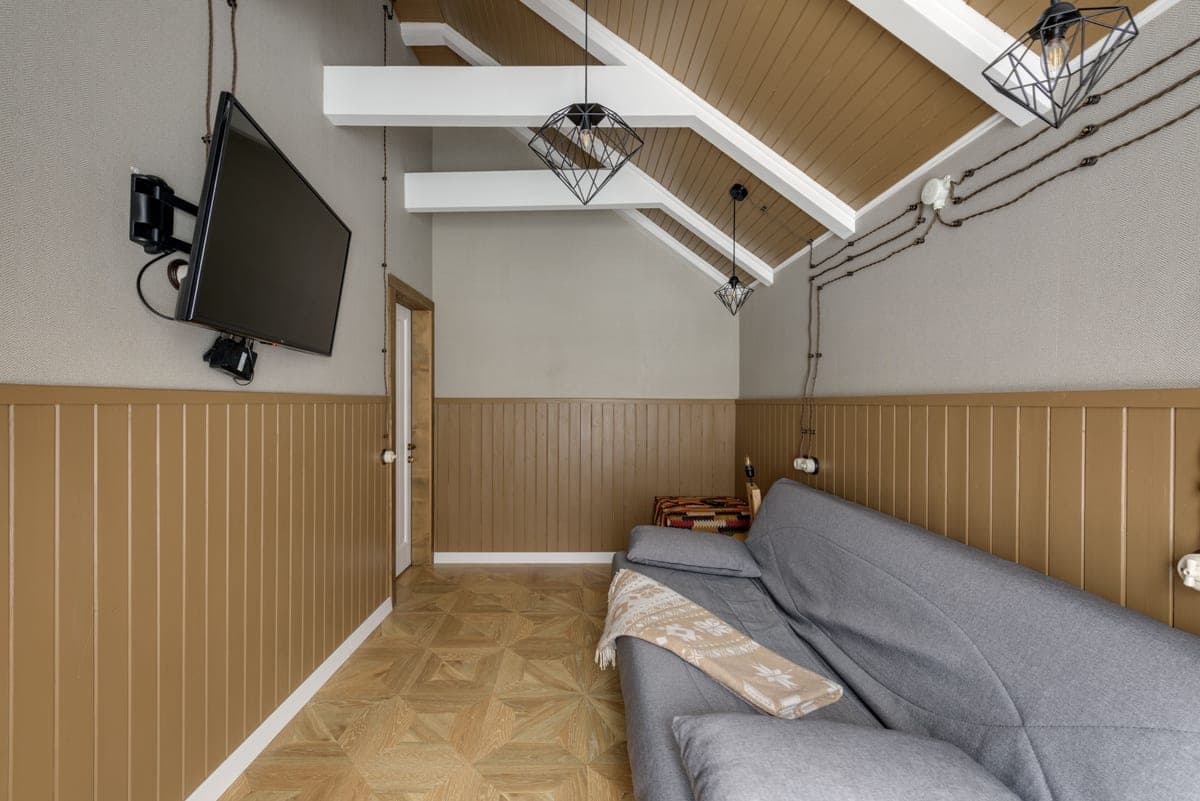
Best Small Cart
The smallest bar carts worth buying
Five carts from 15 inches wide, compared on published depth, weight and shelf rating.
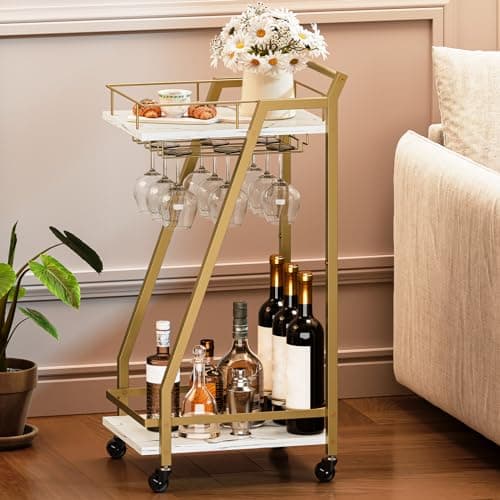
Top pick: HOOBRO Gold Bar Cart (DM27TC01)
#ad Disclosure · Price as of October 17, 2026
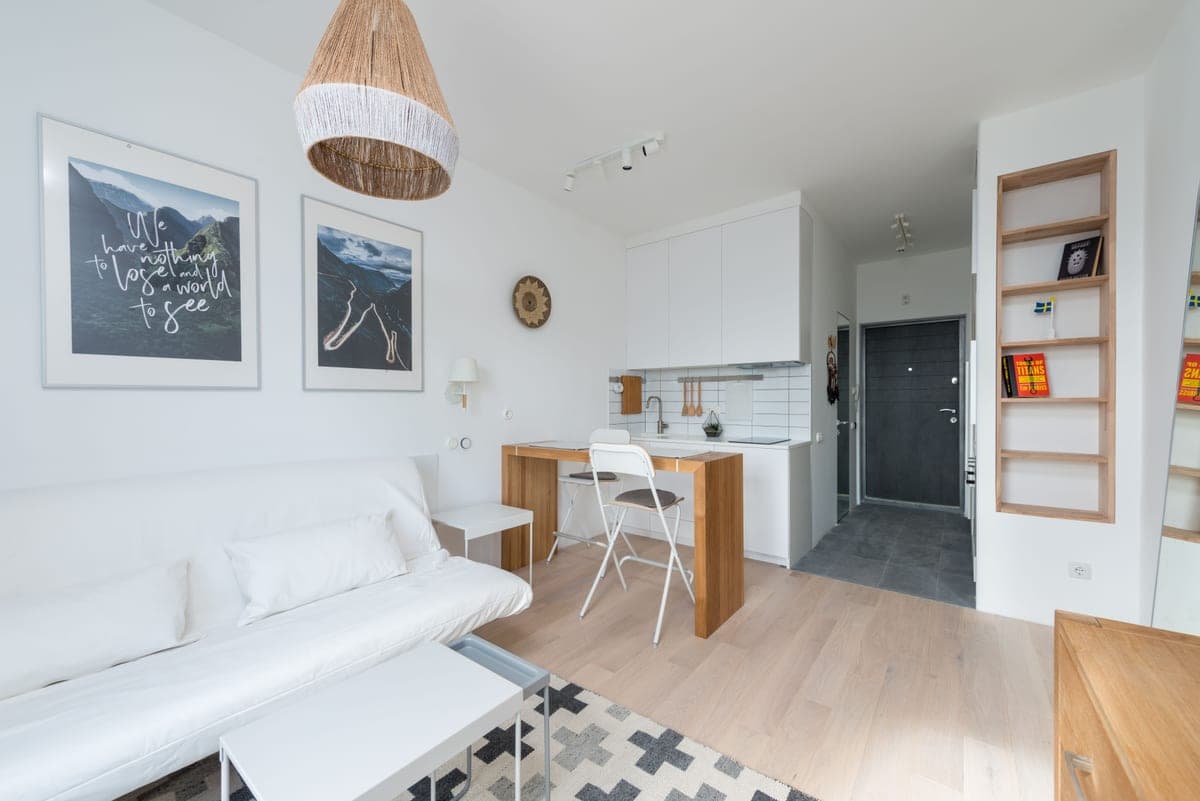
Best for Apartments
Bar carts for apartments
Five carts chosen for doorway clearance, floor type and moving day, not just footprint.
Top pick: MAHANCRIS Gold 2-Tier Bar Cart (RCJ63B01Z)
Best Narrow Cart
The tall, narrow bar carts worth the money
Five narrow carts compared on published width, depth and shelf rating, from 9.4 inches across.
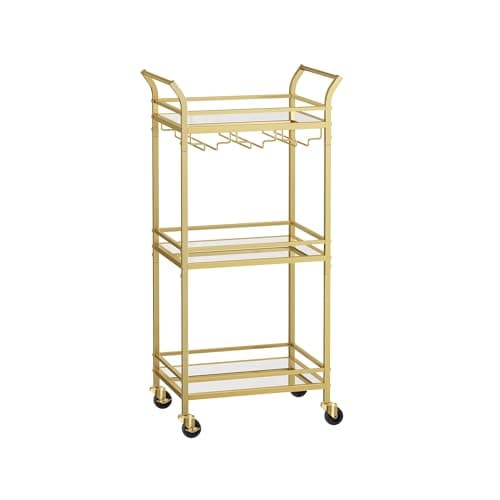
Top pick: VASAGLE 3-Tier Gold Bar Cart (ULRC091A62)
#ad Disclosure · Price as of October 17, 2026
Best Round Cart
Round bar carts, and what the shape costs
Four round carts compared on published load and diameter — and the square-inch arithmetic of choosing a circle.
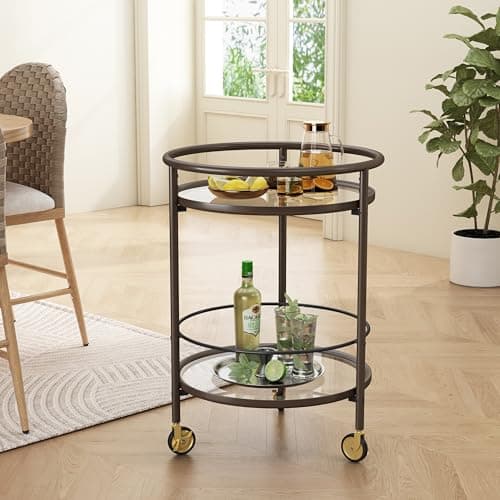
Top pick: Christopher Knight Home Keria Round Bar Cart (350916)
#ad Disclosure · Price as of October 17, 2026

Best Three-Tier Cart
Three-tier bar carts, and whether the third shelf works
Six three-tier carts compared on published shelf gaps and per-shelf ratings — and why only the tall ones publish either.
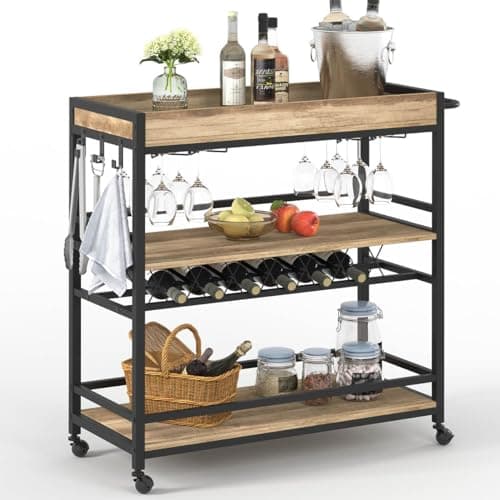
Top pick: BON AUGURE 3-Tier Bar Cart, Vintage Oak (BNG-BC1841-V)
#ad Disclosure · Price as of October 17, 2026
Working it out
Guides and comparisons



The rest of the argument
The three numbers to measure before you buy
Depth is the one to check first. A standard rectangular serving tray is around 12 by 16 inches. Of the carts in our library, published depths run from 11.2 inches to 20 inches. That means a tray sits flat on some of these and overhangs on others by four inches, and an overhanging tray is not a tray, it is a lever. If you intend to use a tray — and styling one is most of what people do with a cart — 15 inches of depth is the practical floor.
Shelf gap decides your glassware. A Libbey Perception coupe is 6 inches tall. A Riedel Veritas coupe is 6.69 inches. A 12 oz rocks glass is about 4 1/8 inches. If the vertical gap between two shelves is 8 inches you can stand coupes on the lower shelf; if it is 6 inches you cannot, and the glasses end up on the top shelf where they compete with the bottles. Almost no listing publishes shelf gap, so it is worth measuring the gap you need and asking rather than assuming.
Clearance is the number people forget entirely. A cart that fits a wall does not necessarily fit a room. You need enough space to stand in front of it and pour, which is roughly 18 inches on the side you work from, and you need whatever walkway the room already depends on to survive. A 24 inch cart against a wall in a 36 inch hallway leaves 12 inches, which is not a hallway any more.
Height is the easiest of the four and the one with the clearest answer. Published heights across our library run from 32.1 to 36.5 inches, and the height guide explains why the low end of that band is more comfortable to serve from than the top of it, and why the tall ones photograph better anyway. If your room is genuinely tight, start with the small-cart roundup and the placement guide, which together will tell you in about five minutes whether a cart is realistic for the space you have.
Every page in this section: Bar cart dimensions · The smallest bar carts worth buying · Bar carts for apartments · The tall, narrow bar carts worth the money · What actually fits in a corner · Two tiers or three? · How tall should a bar cart be? · Where to put a bar cart · Round bar carts, and what the shape costs · Three-tier bar carts, and whether the third shelf works