Section 04
Features and formats
Wheels, racks, drawers, doors. Every feature costs either money or shelf space, and a few of them cost both for nothing.
Orientation
What this section covers
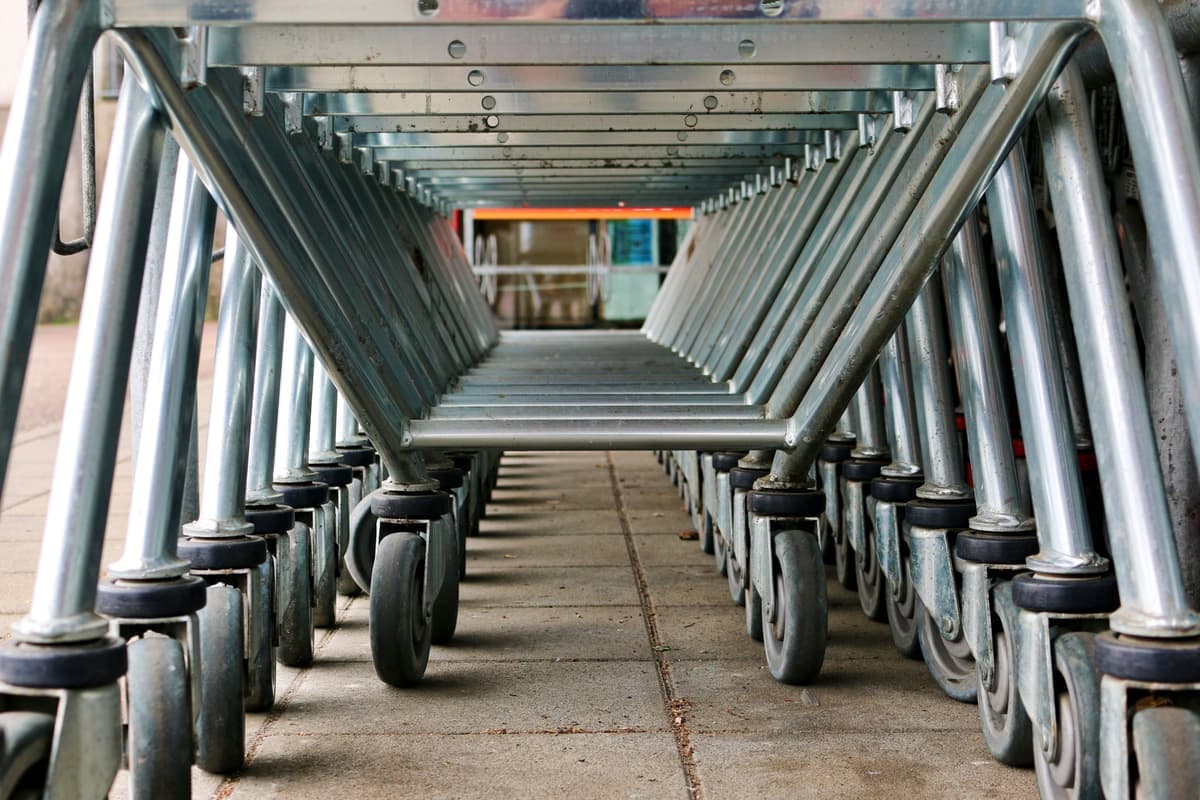
Every feature on a bar cart costs either money or shelf space, and a few of them cost both while doing very little. Wheels are the exception: without them the object is a shelf unit and you are paying a premium for nothing. Everything else — the wine rack, the stem holders, the extra tier, the cabinet doors — is worth having only if it displaces something you would otherwise store badly.
This section covers those trade-offs one at a time. The three roundups address the three features people search for by name: storage, wheels and wine racks. The two comparisons address the bigger question sitting behind all of them, which is whether a cart is the right piece of furniture at all, or whether a cabinet or a sideboard would serve better.
The two guides deal with the specifications that decide whether a feature works in practice: caster quality, which is why a cart with wheels sometimes will not roll, and weight capacity, which is why a shelf that looks generous holds six bottles.
Two more features change the question rather than answering it. Going outdoors makes material the only specification that matters, because a board shelf that meets one heavy dew never recovers. And adding a mini fridge turns out not to be a feature you can buy at all — nobody builds one in, and the reasons are weight, shelf gap and a mains cable. A third, a cart with doors, exists but almost never under that name: the product you are looking for is filed as a coffee bar cabinet on castors.
Three pages below start from a question rather than a feature, because the specifications only matter once you know what the cart is being asked to do. Bar carts for entertaining is about the thing that actually runs out at a party, which is ice rather than bottles, and about why rails beat capacity on a cart that has to cross a threshold loaded. Can a bar cart hold a microwave? works the published clearance arithmetic — three inches each side and above — and finds that exactly one cart here publishes a shelf gap big enough. And can you use a bar cart in a bathroom? answers itself from the listings: the board-shelf carts publish "wipe with dry cloth" as their care instruction, which settles the material question before style gets a say.
What to buy
The picks in this section
Best With Storage
Bar carts with real storage
Five carts with genuine storage, compared on rack type, depth and published load rating.
Top pick: SONGMICS Bar Cart with Flexible Wine Rack (ULRC291A02)
Best on Wheels
Bar carts on wheels that actually roll
Five carts compared on the three things that decide whether wheels are useful.
Top pick: HOOBRO 3-Tier Bar Cart (BF35TC01)
Best Wine Rack
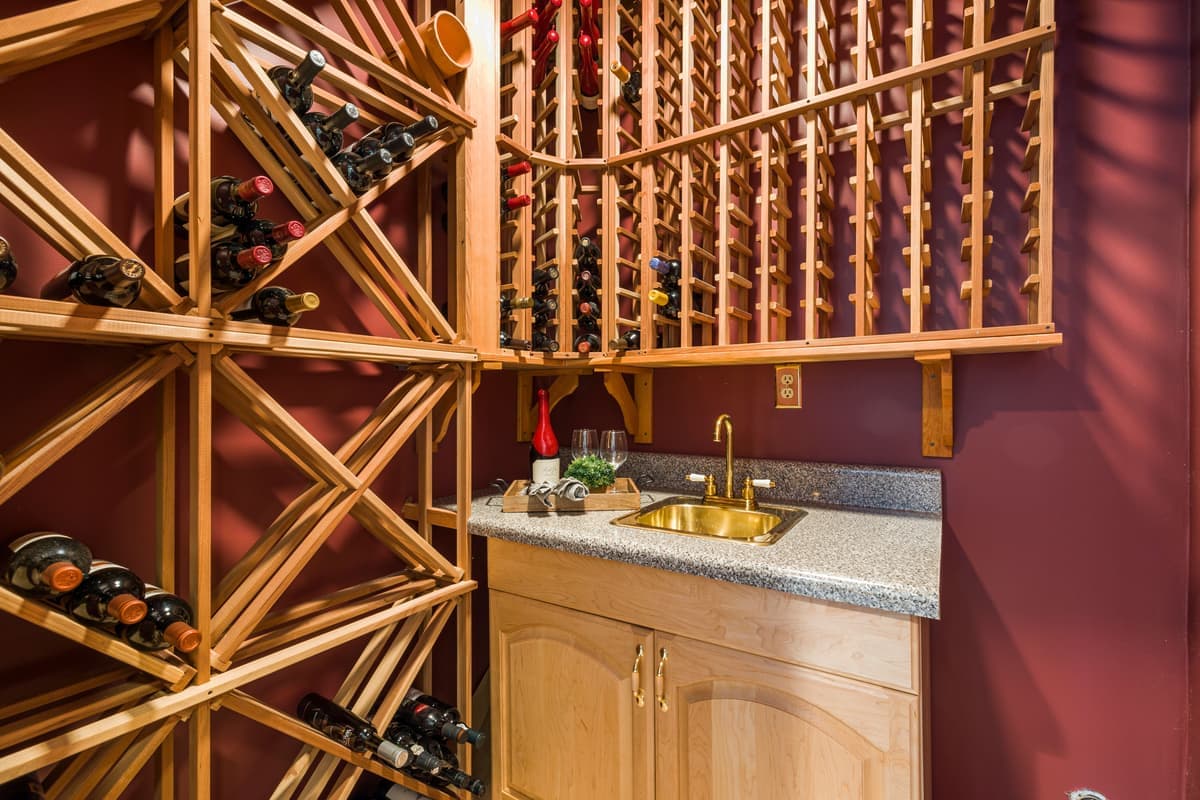
Bar carts with wine racks
Carts with wine racks compared on rack type, bottle geometry and depth.
Top pick: SONGMICS Bar Cart with Flexible Wine Rack (ULRC291A02)
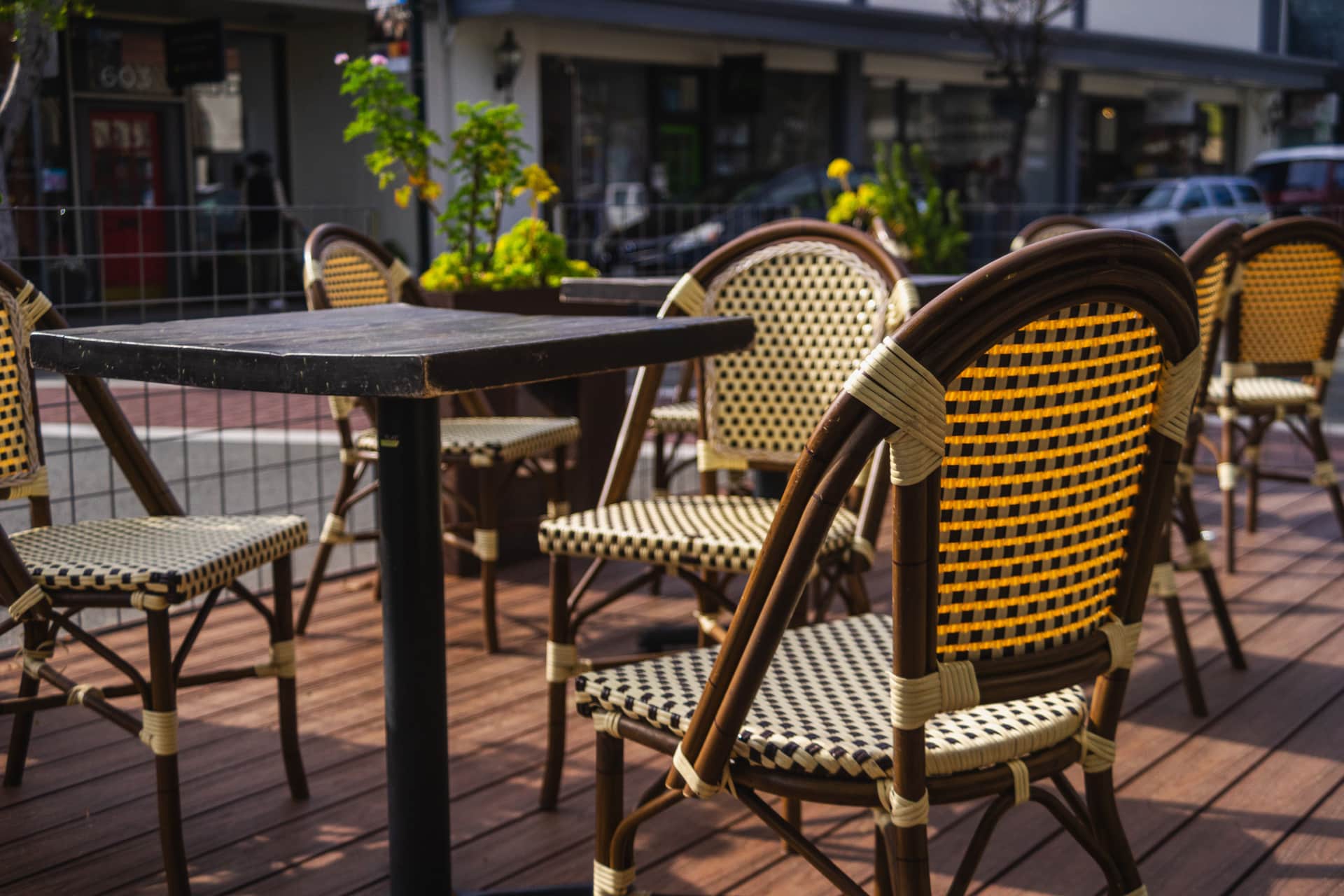
Best Outdoor Cart
The outdoor bar carts worth the money
Five genuinely outdoor carts compared on published capacity, materials and wheel size.
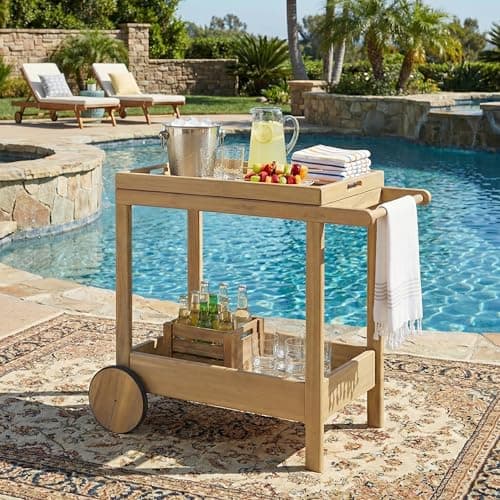
Top pick: Christopher Knight Home Sara Acacia Outdoor Bar Cart (378245)
#ad Disclosure · Price as of October 17, 2026
Best Enclosed Cart
Bar carts with doors
Five carts and cabinets on castors that genuinely close, compared on published size and storage.
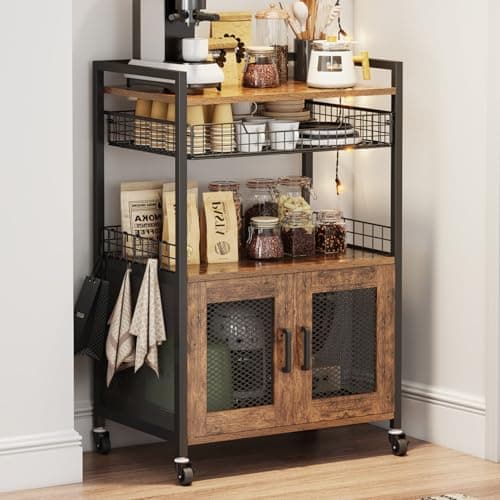
Top pick: Hencawima 3-Tier Coffee Bar Cabinet on Wheels (CFG-FX)
#ad Disclosure · Price as of October 17, 2026

Best for Entertaining
Bar carts for entertaining
Five carts for hosting, compared on bottle and glass counts, rails, ice capacity and published load.
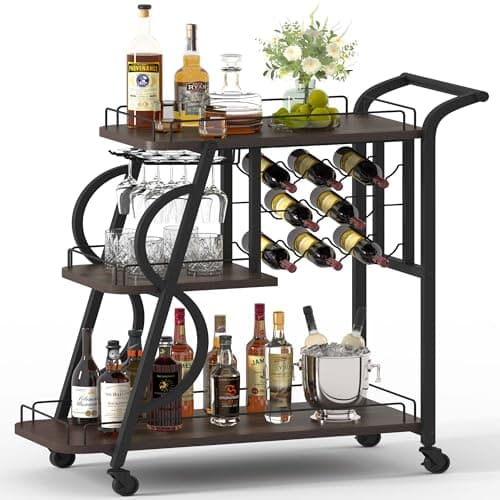
Top pick: Aubtik 3-Tier Industrial Bar Cart (AU-BC208-W)
Best for a Bathroom
Can you use a bar cart in a bathroom?
Five carts that survive a wet room, compared on material, published care instructions and footprint.
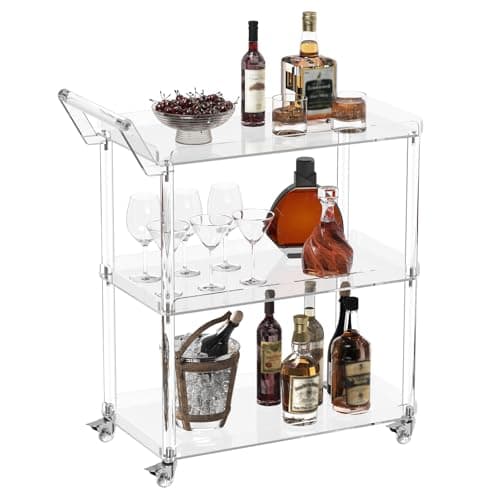
Top pick: HMYHUM 3-Tier Acrylic Bar Cart, 30.5 inch (01018)
#ad Disclosure · Price as of October 17, 2026
Best for an Appliance
Can a bar cart hold a microwave?
The clearance arithmetic for a microwave on a cart, and the five carts whose published figures survive it.
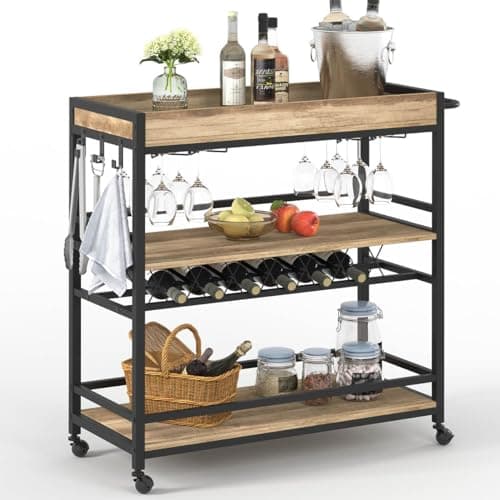
Top pick: BON AUGURE 3-Tier Bar Cart, Vintage Oak (BNG-BC1841-V)
#ad Disclosure · Price as of October 17, 2026
Working it out
Guides and comparisons
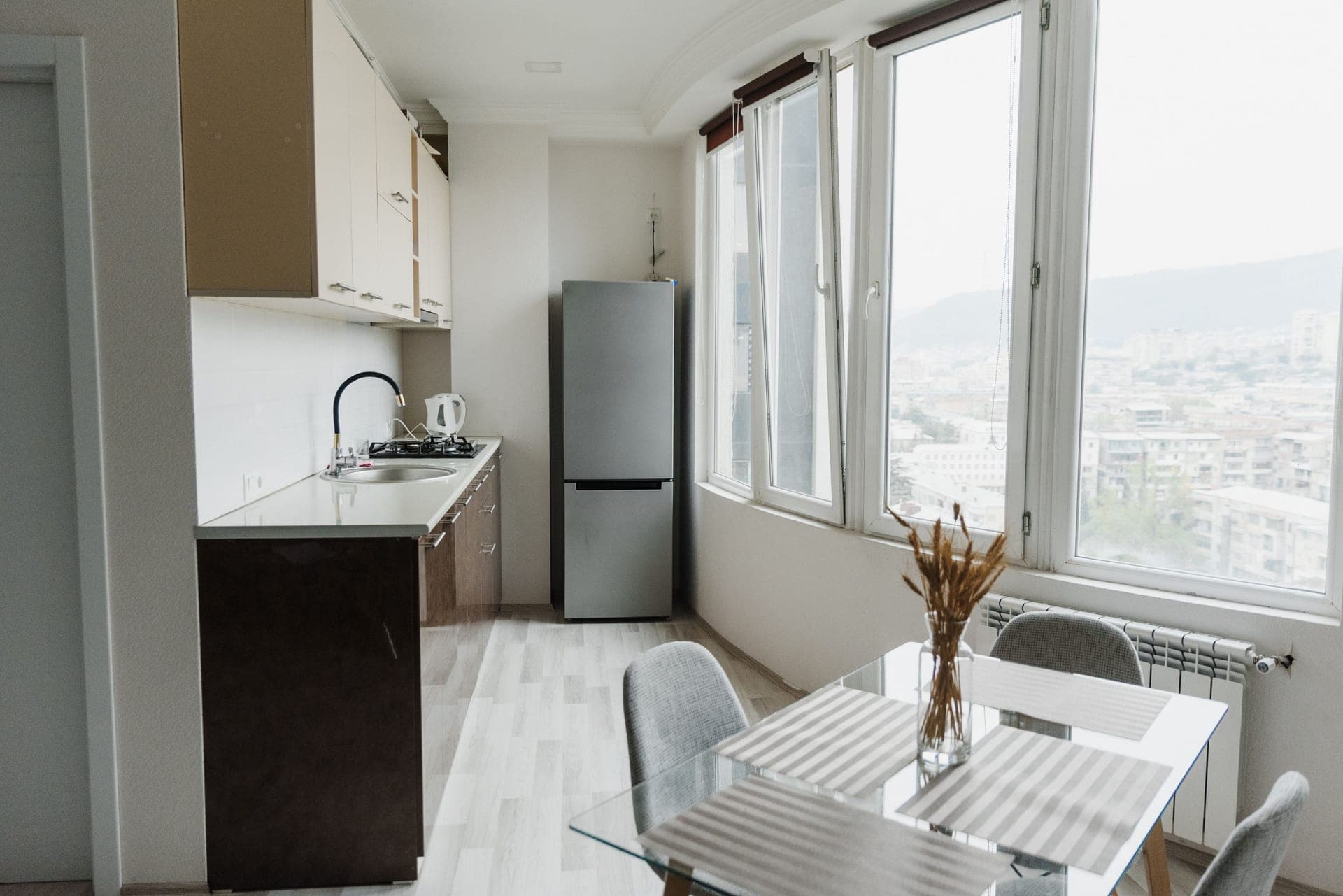
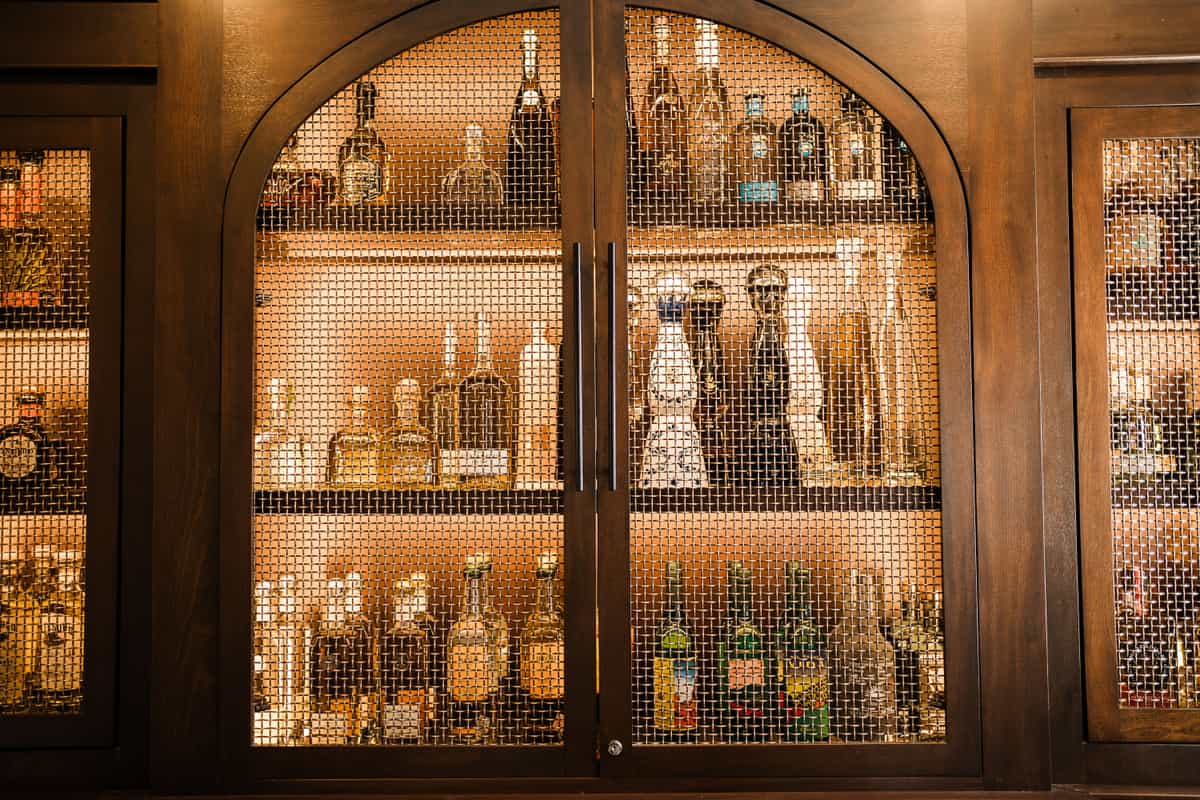
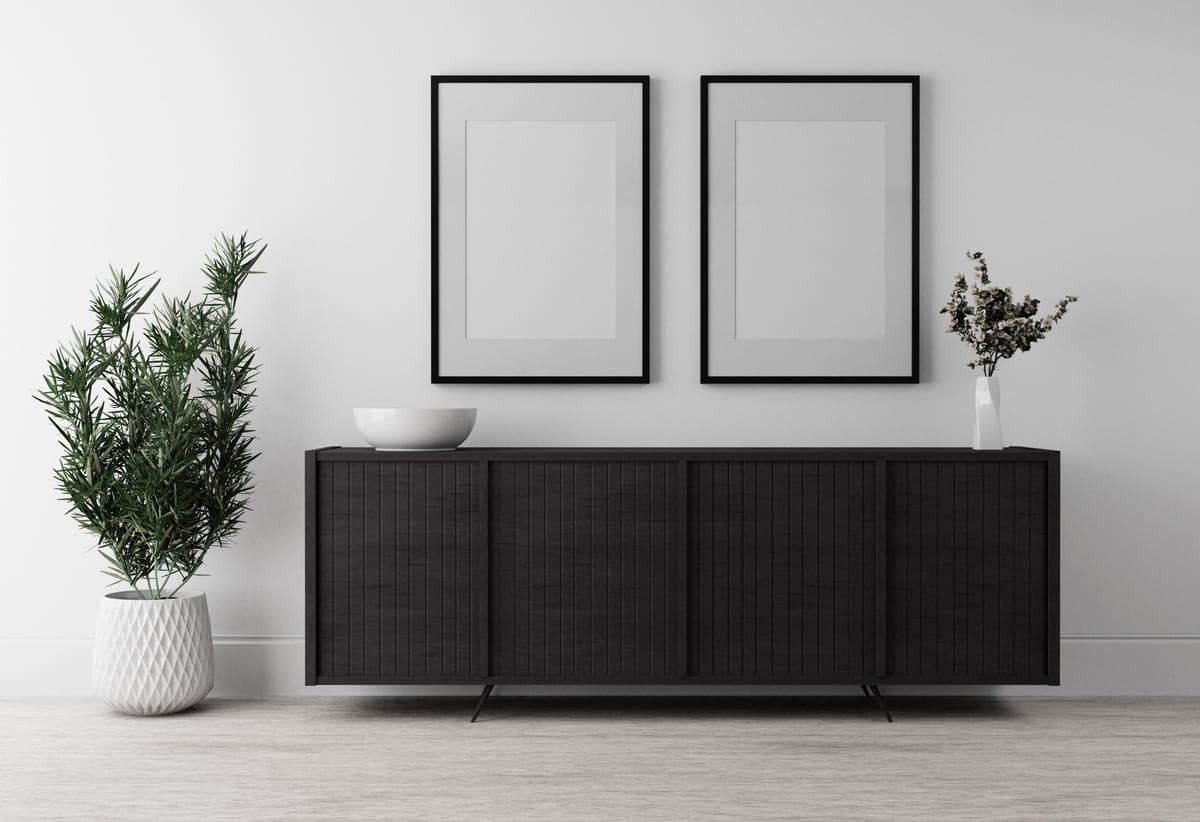

The rest of the argument
Which features earn their space
A wine rack earns its space if you drink wine. It is a genuine efficiency: bottles stored horizontally use the dead vertical space under a shelf that would otherwise hold nothing, and the corks stay wet. The SONGMICS cart in our library goes further and makes the rack repositionable, which is the right design because a fixed rack decides your bottle count for you. If you mostly drink spirits, a rack is decoration that occupies the shelf you needed.
Locking casters earn their space always. A cart that moves when you lean on it is worse than a cart that does not move at all, and locks are the difference. They are also the most commonly omitted feature at the bottom of the price range. The caster guide covers what to check: wheel diameter against your floor type, whether the locks are on both wheels or one, and why hard casters on hard floors are the wrong combination.
A third tier is usually a trap on a shallow cart. Three shelves at 11 or 12 inches deep gives you more area but less usable area, because the shelf gaps shrink and the tall things — bottles, the ice bucket, a coupe glass — stop standing up. Two generous shelves beat three cramped ones, which is the argument in two tiers versus three.
Doors and drawers change what the object is. Once a cart has a cabinet, you are no longer buying a cart with storage; you are buying a small cabinet with wheels, and the comparison that matters is cart against cabinet rather than cart against cart. Enclosed storage hides the mismatched bottles, which is the honest reason most people want it, and it also ends the display value that made a cart appealing in the first place.
Capacity ties all of this together. Our capacity guide converts published shelf ratings into bottles, glasses and ice buckets, so a 44 lb figure stops being abstract and starts being a decision.
Every page in this section: Bar carts with real storage · Bar carts on wheels that actually roll · Bar carts with wine racks · The outdoor bar carts worth the money · Bar carts with mini fridges · Bar carts with doors · Bar cart or bar cabinet? · Bar cart or sideboard? · Bar cart wheels and casters · How much space is between bar cart shelves? · What a bar cart shelf rating actually means · Bar carts for entertaining · Can you use a bar cart in a bathroom? · Can a bar cart hold a microwave?