Section 04 · Features
Bar cart wheels and casters
Caster specifications are almost never published, so the practical approach is knowing what fails and checking it on arrival.
We earn a commission if you buy through our links, at no extra cost to you. We have not tested these carts. Here is what we did instead.
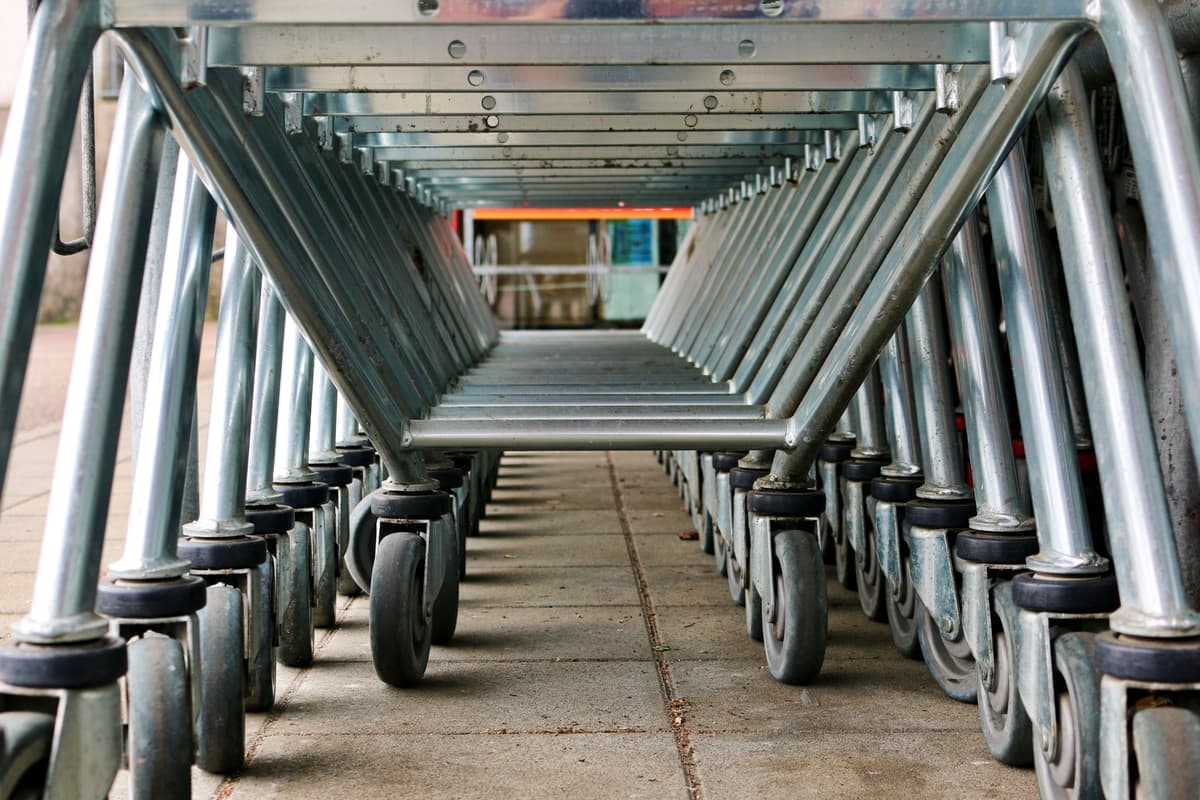
Wheels are the only thing that makes a bar cart a bar cart rather than a shelf unit, and they are also the component least likely to be specified on the listing. Diameter, material, lock count and swivel arrangement all affect how the cart behaves, and most listings mention none of them.
So this page is written as a checklist for arrival rather than for shopping: here is what to look at, what each failure feels like, and what you can fix afterwards.
The four specifications that matter
Diameter
Bigger wheels roll over more. A small hard caster catches on a door threshold, on the edge of a rug, and on the lip between two rooms — exactly the transitions a cart is bought to cross. If a cart has to move between rooms regularly, wheel diameter is the specification to prioritize and the one you will have to judge from photographs.
Material
Hard plastic casters are the default at this price. On hard floors they roll well and are noisy; on some laminates they mark. Rubber or rubber-tyred casters are quieter and gentler and are rare in this category. This is the single most worthwhile aftermarket upgrade, and it is usually a straightforward swap.
Locks
Two locking wheels out of four is the standard arrangement and is enough to hold a cart still. Zero is common at the bottom of the market. A light cart without locks moves when you lean on it, which matters more than it sounds: leaning on a cart is what people do while pouring.
The HOOBRO carts in our library publish lockable wheels, which is a genuine differentiator at that price.
Swivel arrangement
Four swivel casters maneuver beautifully and wander slightly. Two swivel at the front and two fixed at the back track straight and turn badly. Most bar carts use four swivels, which suits an object that gets nudged sideways into a gap more often than it gets pushed down a corridor.
Your floor decides more than the cart
Hardwood and tile: everything rolls, which is the problem. Prefer a heavier cart or insist on locks. Consider felt-free rubber casters if noise matters.
Thin carpet over concrete: small hard casters sink and the cart stops rolling. This turns the wheels into decoration and it is very common in apartments. Larger wheels are the only real fix.
Thick pile and rugs: a loaded cart becomes a shove. If the cart has to move on pile, buy light — under about 20 lb — and accept that a fully loaded cart on a rug is a two-hand job regardless.
Uneven old floors: adjustable feet, if the cart has them, matter more than the wheels. The HOOBRO BF02TC01 publishes them.
Fixing wheels that are wrong
Casters are one of the few furniture components that are genuinely replaceable. Most bar cart casters use a stem or a plate mount, and replacements are inexpensive. Two rules:
- Measure the existing stem or plate before ordering. Stem diameter and length, or plate hole spacing. Getting this wrong is the only way this goes badly.
- Do not increase diameter dramatically. Bigger wheels raise the cart, and a cart raised an inch is a cart whose shelf gaps still fit your bottles but whose height no longer matches your sofa arm.
The other fix, if a cart rolls too easily rather than too little, is simply to stop moving it: lock the wheels and treat it as furniture. That is a legitimate outcome, and if you reach it, the honest next question is whether a console table would have served better.
What I would buy
The picks this page points to
These sit here rather than at the top on purpose: the advice above is what decides the choice, and a recommendation only means something once you know what you are choosing between.
Three shelves, narrow
HOOBRO 3-Tier Bar Cart (BF35TC01)
HOOBRO
Three shelves at 12.8 inches deep, 55 lb each. The depth is the reason to look: it is shallower than almost every other three-tier cart with a published figure, which is what lets it sit in a hallway without becoming an obstacle.
- Dimensions
- 23.6"L x 12.8"W x 33.9"H
- Weight
- 21.4 lb
- Load per shelf
- 55 lb static
- Materials
- Particleboard and metal frame
- Shelves
- 3, with wine rack
Specs compiled from: HOOBRO BF35TC01 published listing, retrieved 2026-09-02.
What is good
- 12.8 inches deep is unusually shallow for three shelves
- 55 lb a shelf sits between the 44 lb and 66 lb clusters in this category
- Lockable wheels, which many carts at this price omit
What is not
- 12.8 inches will not take a standard tray flat, so measure before buying one
- Particleboard again, so wet rings are permanent if you are careless
- Three shelves at this depth tempt you to stack, and stacking is how glass breaks
Mid-century rooms
Nathan James Hallie Rolling Bar Cart
Nathan James
27 inches wide, 17 deep, 36 tall, and only 14 lb — an unusually good ratio. It is the mid-century-styled cart I would actually buy, mostly because 17 inches of depth is generous and the whole thing still lifts with one hand.
- Dimensions
- 17"D x 27"W x 36"H
- Weight
- 14 lb
- Weight capacity
- 66 lb
- Style
- Mid-century modern, two tiers
- Height
- 36", the tall end of the range
Specs compiled from: Nathan James Hallie published listing, retrieved 2026-09-02.
What is good
- 17 inches deep takes a large tray and still leaves an edge
- 14 lb for a 27 inch cart is the best weight-to-size ratio here
- 66 lb capacity despite the low frame weight
What is not
- 36 inches tall reads high next to a low mid-century sofa
- Two tiers only, so bottle capacity is limited by area rather than rating
- Light frames flex slightly when pushed over a threshold
How these were picked
I have not tested any of these carts. What I did instead: compiled the published specifications from each listing, recorded the figures with their source, checked the footprint against the clearances a real room has, worked out how many standard bottles a stated shelf actually holds, and named the one I would skip. Where two listings for the same cart disagree, the page says so rather than quietly picking one.
Frequently asked
Questions
Do bar cart wheels scratch hardwood floors?
Can you replace bar cart casters?
How many locking wheels does a bar cart need?
Sources
Where the facts on this page came from
Specifications attributed to a retailer listing were read from that listing on the date shown on each product card. Listings change; if you find one that no longer matches what we published, tell us and we will check it and correct the page.
Read next
Related pages
Filed under Features. Permanent link: /features/bar-cart-wheels-and-casters