Section 05 · Stocking
How to stock a bar cart
Six bottles, two glass shapes, five tools. That is a working home bar, and it is what one 24-inch shelf will actually hold.
We earn a commission if you buy through our links, at no extra cost to you. We have not tested these carts. Here is what we did instead.
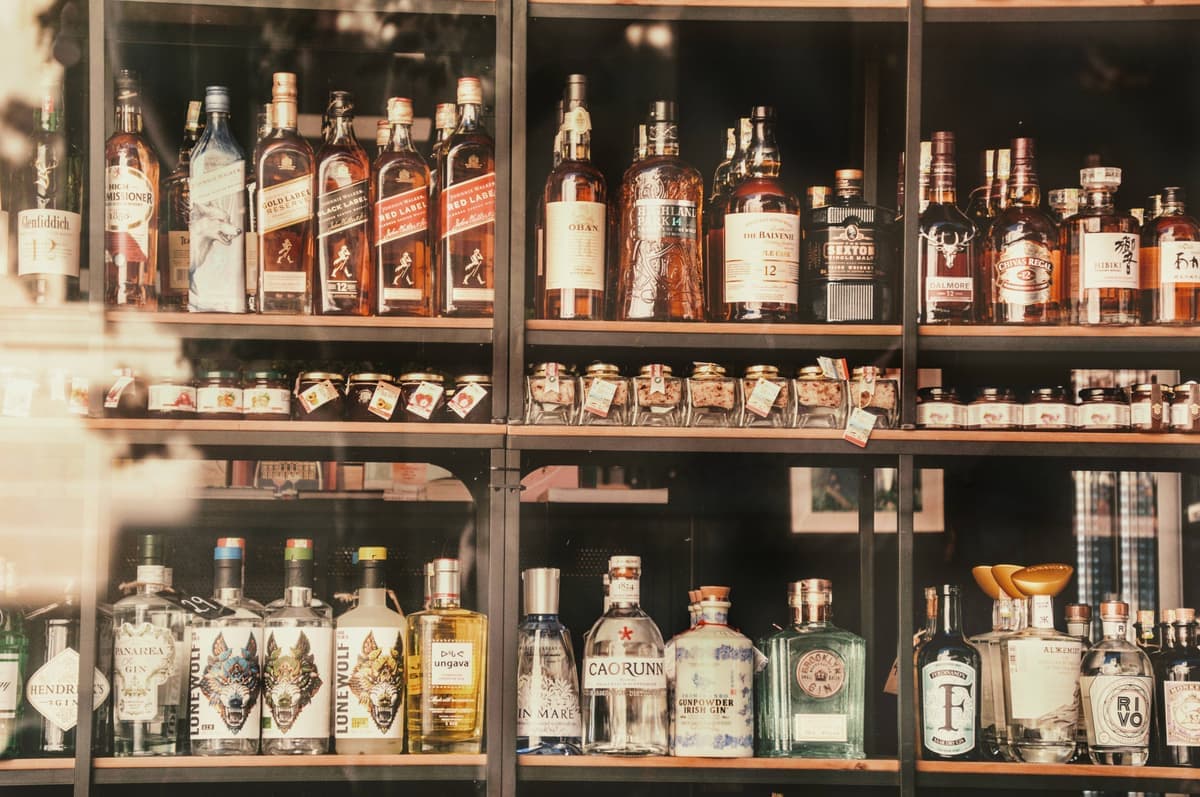
Stocking a bar cart is a shelf-area problem disguised as a shopping problem. Start with the arithmetic and the shopping answers itself.
A standard 750 ml bottle is published at 11.8 inches tall and 2.95 inches in diameter. A 24 inch shelf therefore takes eight of them edge to edge, touching, which nobody does. Six is the real number. Everything below is built around six.
Step one: six bottles, in this order
- A base spirit you actually drink. Gin, whiskey, tequila or rum — whichever one you would pour tonight. This is the bottle the cart exists for.
- A second base spirit you drink differently. If the first is a sipping spirit, make the second a mixing one, or the reverse. Two bottles that do the same job is one bottle of dead shelf.
- A vermouth. Sweet or dry depending on the first two. This is the bottle that turns a spirit into a cocktail, and it is the one most home bars skip and then wonder why nothing tastes finished.
- A bottle of bitters. Small, cheap, lasts years, and does more per milliliter than anything else on the cart.
- A citrus liqueur or a syrup. The sweet-and-sour axis. One bottle, not three.
- One long mixer. Tonic, soda or ginger. This is the bottle that lets you make someone a drink at 3pm.
Stop at six until you have finished one. The seventh bottle is where a cart stops being a bar and starts being storage, and it is where the arrangement stops looking composed — see how to style a bar cart. The longer reasoning is in the bottle list.
Step two: two glass shapes, four of each
A 12 oz double old fashioned covers spirits neat, spirits on ice, anything short and water. Libbey publishes the Ocular at 4 1/8 inches tall and 3 1/2 inches across the top, which fits under any realistic shelf gap.
A coupe covers everything served up. Here the height is the decision, not the prestige: the Libbey Embassy is 4.5 inches, the Libbey Perception is 6, and the Riedel Veritas is 6.69. If your shelf gap is 7 inches, the first two stand up and the third is tight.
Four of each. Eight glasses is enough for four people to have two drinks, which is more entertaining than most homes do, and it is about as much as a shelf holds alongside anything else. Full comparison in the glassware roundup.
Step three: five tools
A jigger, a shaker, a strainer, a bar spoon and a muddler. That is a complete home bar and the reason to buy an eight-piece set rather than the five-piece is usually the pourers rather than the tools.
The jigger is the one that matters. Measured drinks are repeatable and eyeballed drinks are not, and the difference shows up on the second one. Everything else on this list makes the process nicer; the jigger makes the result better. Footprint comparison in the tools roundup.
Step four: ice, and where it goes
A double-walled bucket keeps ice through an evening; a single-walled one keeps it through a drink. Height is the specification to check, not capacity: the buckets we compiled hold the same three quarts at 8 inches and 10.4 inches tall respectively, and 10.4 will not stand under most middle shelves.
Full ice needs to be near the glasses and near the pouring hand, which usually means the top shelf. That takes about 8 inches of your shelf width — a quarter of a 24 inch shelf — which is why ice is the thing that most often forces a cart's arrangement.
Step five: the tray
Last, and the most transformative single object. A tray groups the bottles into one thing instead of six, catches drips, and lets you lift the whole arrangement to clean underneath. A standard tray is around 12 by 16 inches, which needs about 15 inches of cart depth to sit flat — a threshold six of the sixteen carts in our dimensions table do not clear.
What I would buy
The picks this page points to
These sit here rather than at the top on purpose: the advice above is what decides the choice, and a recommendation only means something once you know what you are choosing between.
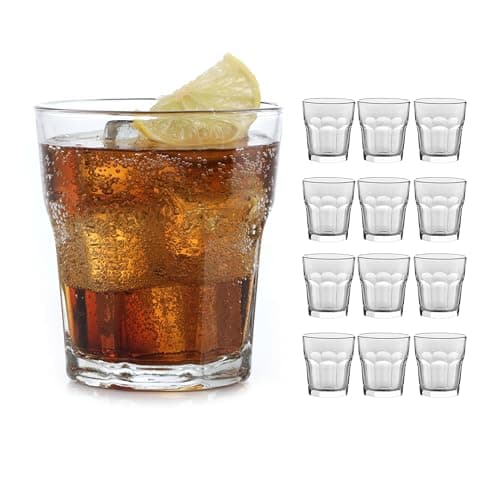
The one glass to own
Libbey Gibraltar DuraTuff Double Old Fashioned, 12 oz
Libbey
If you buy one shape, buy this one. A 12 oz double old fashioned takes spirits neat, spirits on ice, a short highball and water. The DuraTuff rim treatment is why these survive dishwashers in bars.
- Capacity
- 12 oz
- Type
- Double old fashioned / rocks
- Rim
- DuraTuff heat-treated
- Sold as
- Set of 12
- Care
- Dishwasher safe
Specs compiled from: Libbey Gibraltar DuraTuff published listing, retrieved 2026-09-02.
What is good
- 12 oz covers more drinks than any other single shape
- The heat-treated rim is the part that normally chips first
- Short glasses stand safely under a cart shelf
What is not
- Twelve is a lot of glasses for two shelves
- Heavy bases add up fast against a 44 lb shelf rating
- Plain restaurant styling, deliberately
#ad Disclosure · Price as of October 18, 2026
The complete starter kit
Amazon Basics 8-Piece Stainless Steel Bar Tools Set
Amazon Basics
A 24 oz shaker, a double jigger marked 1/2 and 1 oz, a spring strainer, a mixing spoon, a muddler, an opener and two pourers. That is the whole list of things a home cart needs, and nothing on it is decorative.
- Pieces
- 8
- Shaker
- 24 oz, leak-proof
- Jigger
- Double-sided, 1/2 oz and 1 oz
- Package size
- 5.31 x 3.74 x 10.63 in
- Material
- Stainless steel
Specs compiled from: Amazon Basics 8-piece published listing, retrieved 2026-09-02.
What is good
- Contains a jigger, which the cheapest sets often leave out
- A 24 oz shaker is big enough for two drinks at once
- A compact package footprint on a shallow shelf
What is not
- A three-piece cobbler shaker strains slower than a Boston set
- No stand, so the pieces live loose on a shelf
- Short muddlers are awkward in a tall tin
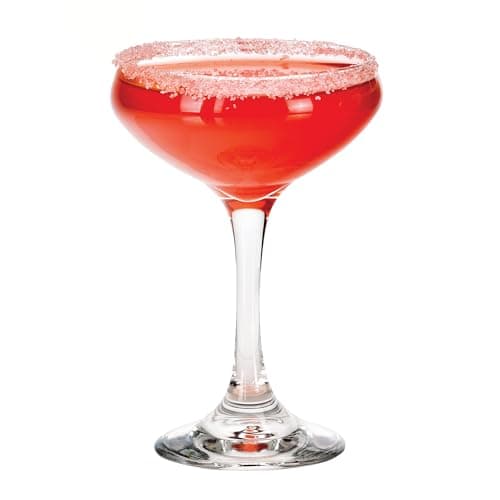
The everyday coupe
Libbey Perception Cocktail Coupe, 8.5 oz (3055)
Libbey
8.5 ounces, six inches tall, 3.75 inches across the rim. It is the coupe most bars actually use, and the six-inch height is the number that decides whether it stands upright under your cart's next shelf.
- Capacity
- 8.5 oz
- Height
- 6"
- Top diameter
- 3 3/4"
- Base diameter
- 3"
- Sold as
- Case of 12
Specs compiled from: Libbey 3055 published specification, retrieved 2026-09-02.
What is good
- 8.5 oz holds a full cocktail plus dilution without reaching the rim
- Restaurant-grade glass, so replacements are easy to buy singly
- The 3" base is stable on a rolling cart
What is not
- At 6" tall it will not stand under a shelf gap much below 8"
- Wide rims spill more than a martini glass when a cart is pushed
- A case of 12 is more coupes than most homes need
How these were picked
I have not tested any of these carts. What I did instead: compiled the published specifications from each listing, recorded the figures with their source, checked the footprint against the clearances a real room has, worked out how many standard bottles a stated shelf actually holds, and named the one I would skip. Where two listings for the same cart disagree, the page says so rather than quietly picking one.
Frequently asked
Questions
What should you put on a bar cart?
How many bottles should be on a bar cart?
What glasses do I need for a bar cart?
Do I need a jigger?
Where does the ice bucket go on a bar cart?
Sources
Where the facts on this page came from
- Standard 750 ml bottle dimensions — Dimensions.com
- Libbey Ocular 12 oz rocks glass dimensions — WebstaurantStore
- Libbey 3055 Perception coupe dimensions — WebstaurantStore
- Libbey Embassy 5.5 oz coupe dimensions — WebstaurantStore
Specifications attributed to a retailer listing were read from that listing on the date shown on each product card. Listings change; if you find one that no longer matches what we published, tell us and we will check it and correct the page.
Read next
Related pages
Filed under Stocking. Permanent link: /stocking/how-to-stock-a-bar-cart