Library
Every cart, one page each
One cart per page: the published numbers, the clearance math, and at least one honest thing it does badly.
Why the library exists
One cart, one page, every published number
A roundup has to compare carts, which means it can only tell you the two or three specifications that separate them. A single-model page can tell you everything the listing publishes, what each figure means for a real room, and the specific thing the cart is bad at.
These pages sit outside the six sections rather than inside them because a model belongs to several at once. The VASAGLE ULRC091A62 is a gold cart, a small cart and a cart with a wine rack, so filing it under Styles would hide it from anyone shopping by size and filing it under Sizing would hide it from anyone shopping by finish. Here it is one page, linked from every roundup it qualifies for. The same is true of the BON AUGURE BNG-BC1841-V, which tops the wood roundup and the industrial one and is also the only cart here rated to carry an appliance, and of the Keter Pacific Cool Bar, which is not really a cart at all and earns its page by being the only thing here that solves temperature rather than storage. The Safavieh Eliza tops the brass roundup, and its page exists because Safavieh publishes two different capacity figures for the same cart. The Safavieh Sienna pairs the narrowest width in its range with the deepest shelf, and the Christopher Knight Keria is the one round cart here that publishes a per-shelf rating. The Holly & Martin Zhori is here for the opposite reason to most: it is the only cart in the library that publishes the dimensions of every shelf separately, which is enough to say in advance what will stand up on each tier.
Each page carries the same four things: the published dimensions and load rating with the date they were read, the arithmetic that converts those into bottles and clearances, at least one honest negative, and a plain statement of who should not buy it. That last one is the part roundups have no room for and it is often the most useful.
What these pages are not: hands-on reviews. I have not assembled, loaded or rolled any of these carts. What I have done is compile what each manufacturer publishes, check it against the constraints a real room imposes, and record where a listing contradicts itself. The full method, and its limits, is on how we pick.
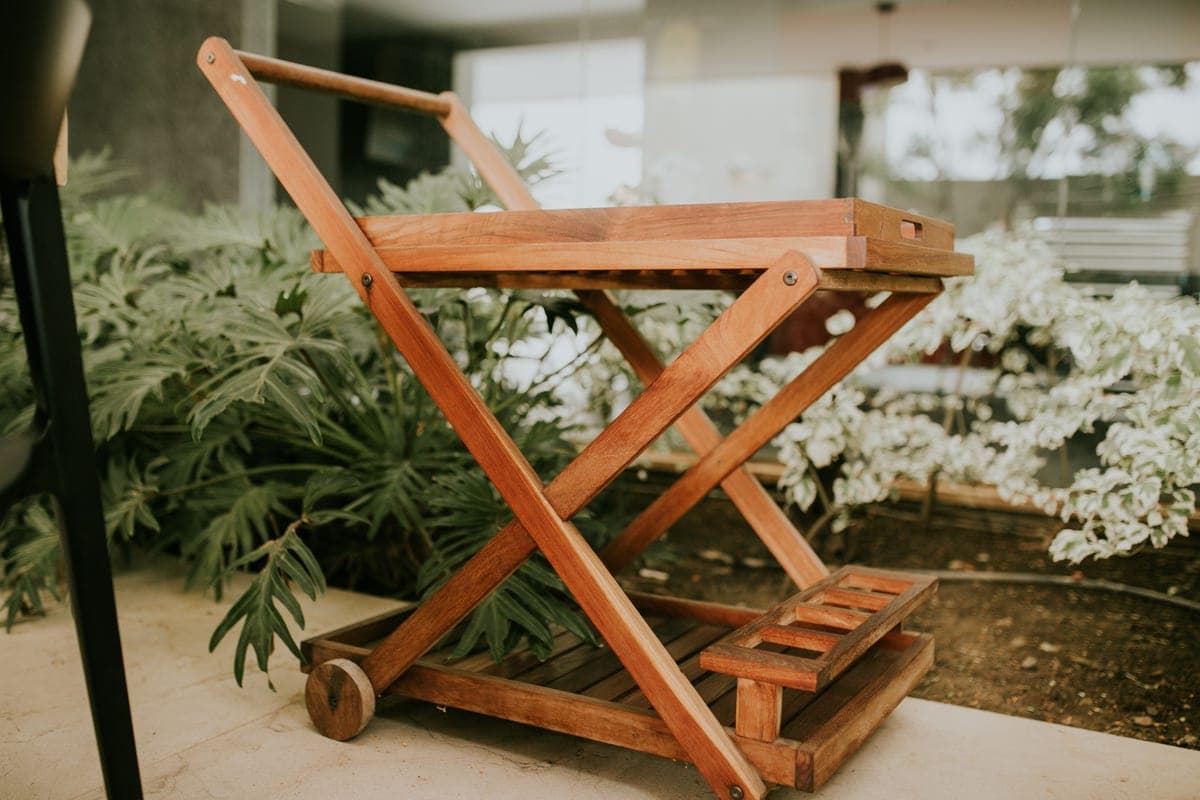
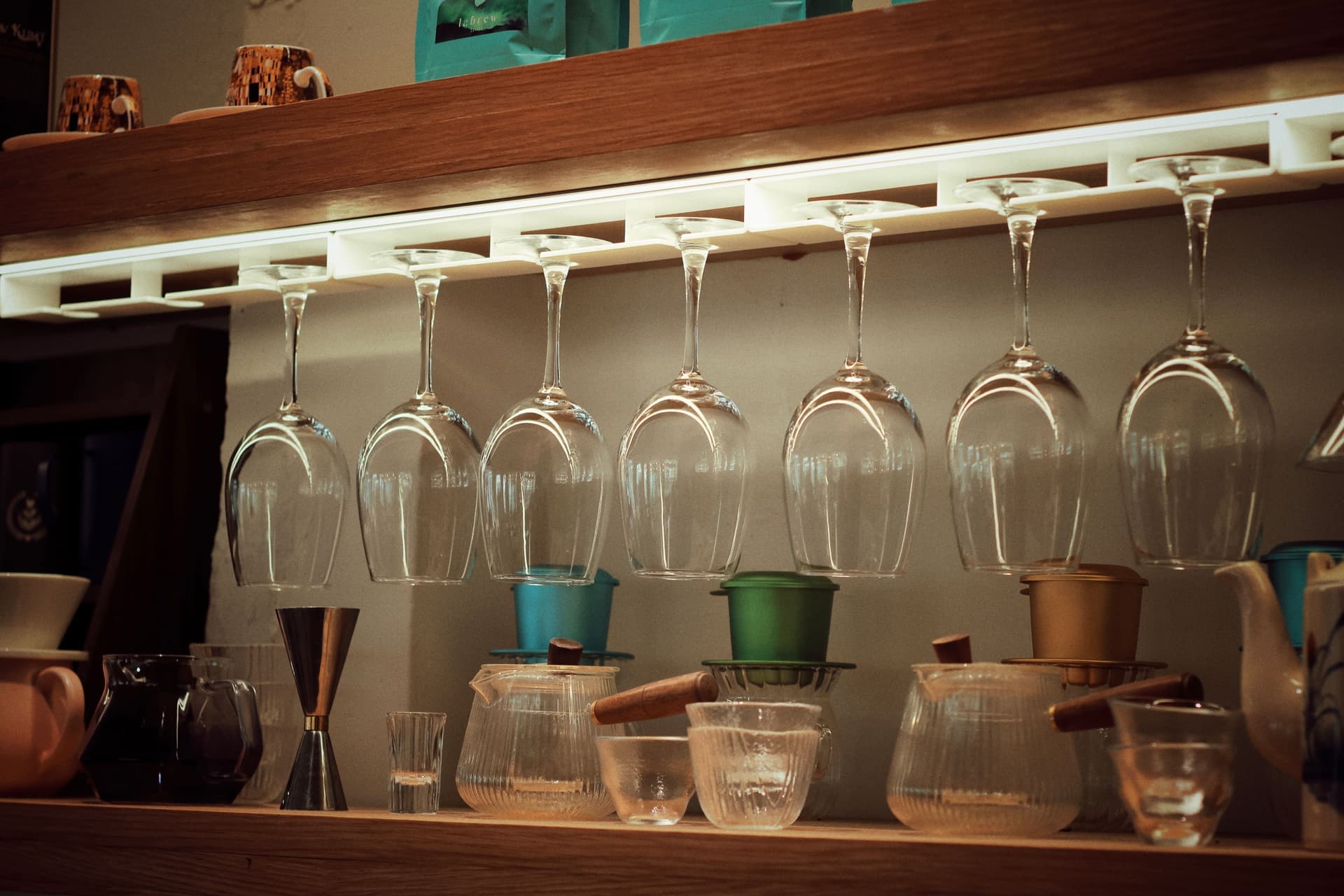
The small photograph on each product card is Amazon's own catalog image for the exact listing the buy button opens, shown only where we could confirm the listing carries the same brand and model number as the cart described. Where we could not, the card says "no photo" rather than borrowing a picture of a different cart. The large image at the top of each page is a licensed editorial photograph of the category, never of the model, and each page says so.
The library
19 carts, one page each
Single model
BON AUGURE BNG-BC1841-V bar cart
37.01 x 14.17 x 35.24 inches, 150 lb a shelf, wine rack, two stemware racks, 39.79 lb.
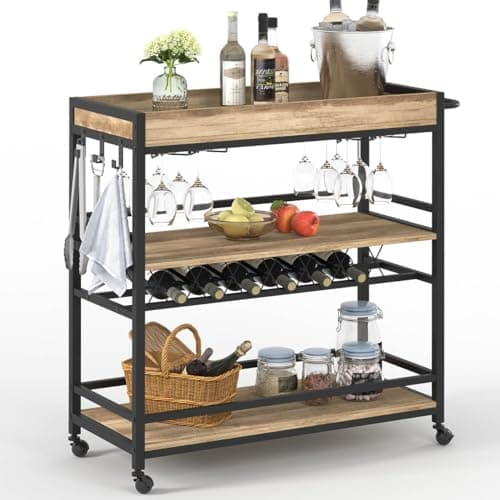
Top pick: BON AUGURE 3-Tier Bar Cart, Vintage Oak (BNG-BC1841-V)
#ad Disclosure · Price as of October 18, 2026
Single model
VASAGLE ULRC100A01 gold bar cart
23.6 x 15 x 36.2 inches, 66 lb a shelf. The depth clears the tray threshold, which most gold carts do not.
Top pick: VASAGLE Gold Bar Cart (ULRC100A01)

Single model
VASAGLE ULRC091A62 gold bar cart
18.4 inches wide, three shelves, 66 lb each. The narrow cart that kept its load rating.
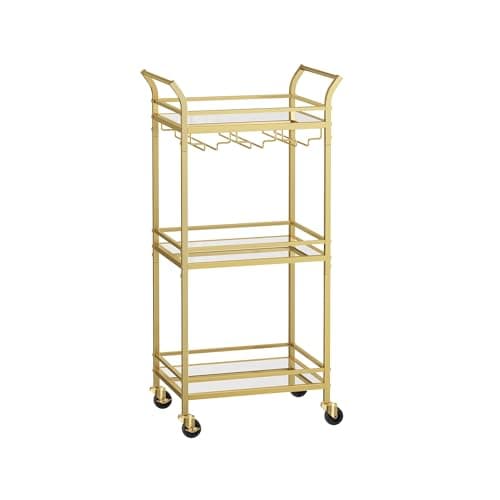
Top pick: VASAGLE 3-Tier Gold Bar Cart (ULRC091A62)
#ad Disclosure · Price as of October 18, 2026

Single model
VASAGLE ULRC083A02 large gold bar cart
33.9 inches of width at only 15 deep, 66 lb a shelf, 36 lb of cart. The serving option.
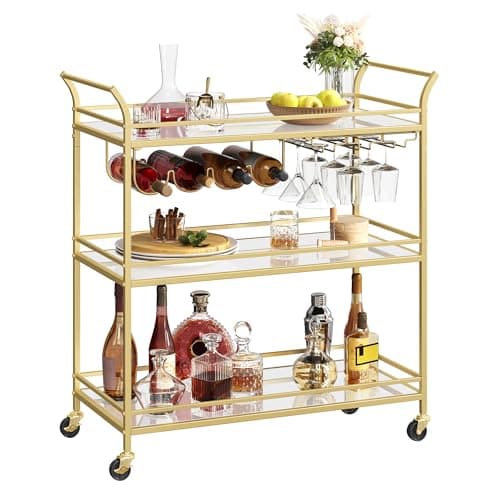
Top pick: VASAGLE Large Gold Bar Cart (ULRC083A02)
#ad Disclosure · Price as of October 18, 2026
Single model
SONGMICS ULRC291A02 bar cart
66.1 lb a tier and 198.4 lb total published, with a wine rack that repositions.
Top pick: SONGMICS Bar Cart with Flexible Wine Rack (ULRC291A02)
Single model
HOOBRO BF02TC01 bar cart with wine rack
25.2 x 15.7 x 33.3 inches, 55 lb a shelf, fixed wine rack, adjustable feet.
Top pick: HOOBRO Bar Cart with Wine Rack (BF02TC01)
Single model
HOOBRO DM27TC01 gold bar cart
15 inches wide, 11 lb, 32.1 tall. The smallest gold cart here, with the lowest load rating.
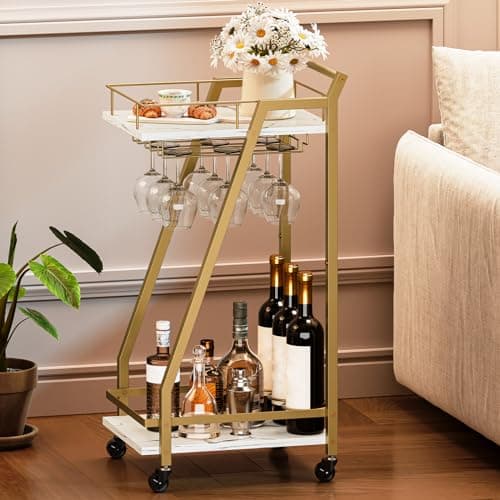
Top pick: HOOBRO Gold Bar Cart (DM27TC01)
#ad Disclosure · Price as of October 18, 2026

Single model
MAHANCRIS RCJ63B01Z gold bar cart
24.8 x 11 x 32.2 inches, 14.74 lb, 44 lb a shelf. Gold and glass, cheaply.
Top pick: MAHANCRIS Gold 2-Tier Bar Cart (RCJ63B01Z)

Single model
Nathan James Hallie rolling bar cart
27 x 17 x 36 inches at 14 lb with 66 lb capacity — the best weight-to-capacity ratio here.
Top pick: Nathan James Hallie Rolling Bar Cart
Single model
Nathan James Sage round bar cart
23 inches across, 12 lb, 66 lb capacity. No corners, which matters more than it sounds.
Top pick: Nathan James Sage Round Rolling Cart
Single model
PETKABOO HSC123WF bar cart
44.49 x 14.3 x 33.9 inches, 42.2 lb, per-tier ratings of 110 / 90 / 110 lb, solid wood.
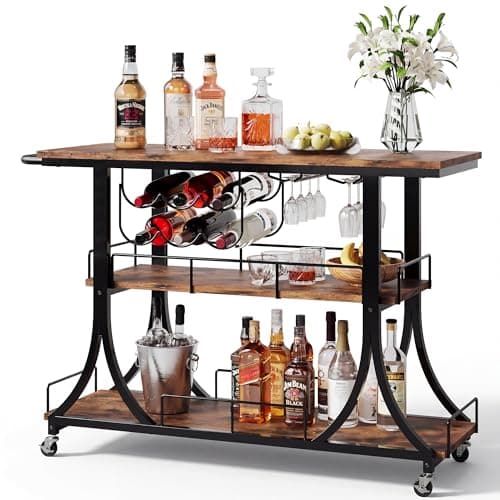
Top pick: PETKABOO 3-Tier Rustic Wooden Bar Cart (HSC123WF)
#ad Disclosure · Price as of October 18, 2026
Single model
Christopher Knight Home Sara outdoor bar cart
35.83 x 18.7 x 30 inches, 28.2 lb, 120 lb published capacity, acacia frame and shelves.
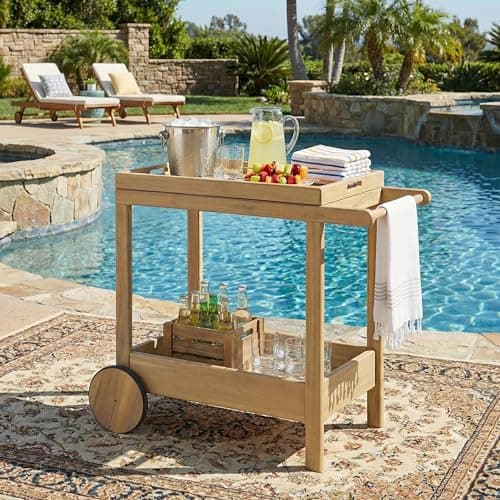
Top pick: Christopher Knight Home Sara Acacia Outdoor Bar Cart (378245)
#ad Disclosure · Price as of October 18, 2026
Single model
Aubtik AU-BC208-W bar cart
35.43 x 16.81 x 36.06 inches, 27.2 lb, 300 lb whole-cart, racks for 8 bottles and 9 glasses.
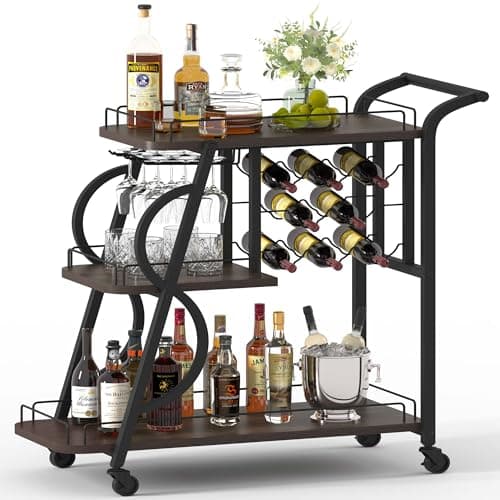
Top pick: Aubtik 3-Tier Industrial Bar Cart (AU-BC208-W)
Single model
VASAGLE Barnet ULRC200K101 bar cart
25.4 x 12.6 x 33.7 inches, 13.7 lb, wine rack, stem holders, six S-hooks — no published rating.
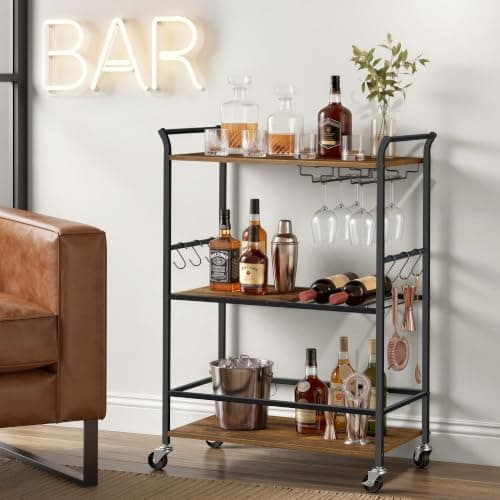
Top pick: VASAGLE Barnet 3-Tier Bar Cart (ULRC200K101)
Single model
Keter Pacific Cool Bar
19.5 x 19.5 x 33.2 inches, 15.4 lb, 110 lb published, 7.5 gallon insulated cooler in the body.
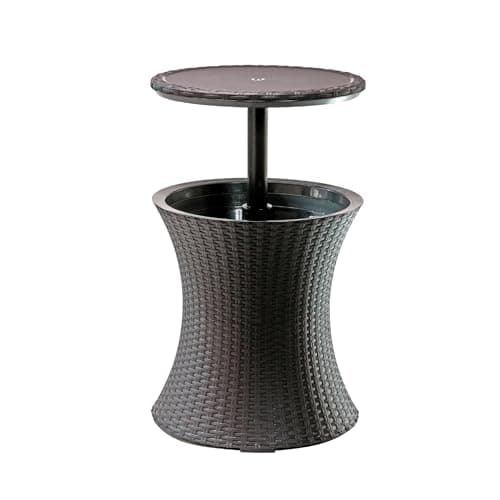
Top pick: Keter Pacific Cool Bar
#ad Disclosure · Price as of October 18, 2026

Single model
Safavieh Eliza BCT8005A bar cart
31.3 x 16 x 33 inches, 30.86 lb, two tempered black glass tiers. 40 lb capacity listed, 22 lb in the instructions.
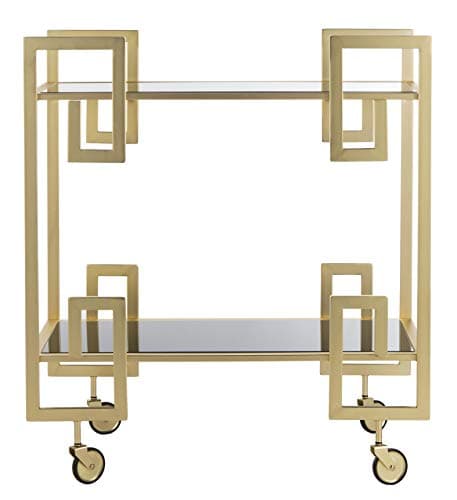
Top pick: Safavieh Eliza Bar Cart, Brass and Black Glass (BCT8005A)
#ad Disclosure · Price as of October 18, 2026

Single model
Safavieh Sienna BCT8001A bar cart
23.8 x 19.9 x 34 inches, 24.25 lb, 40 lb published. The narrowest and deepest cart in the Safavieh range.
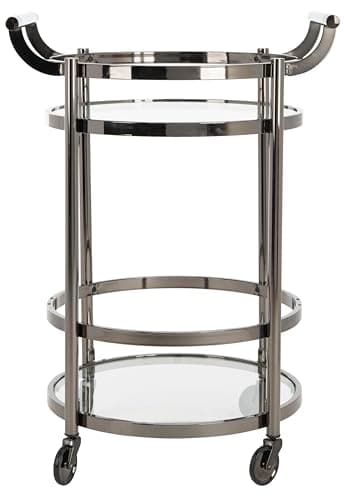
Top pick: Safavieh Sienna Bar Cart, Gunmetal and Glass (BCT8001A)
#ad Disclosure · Price as of October 18, 2026
Single model
Christopher Knight Home Keria round bar cart
23.75 inches across, 32 tall, 17.68 lb, 33 lb per shelf, four locking casters.
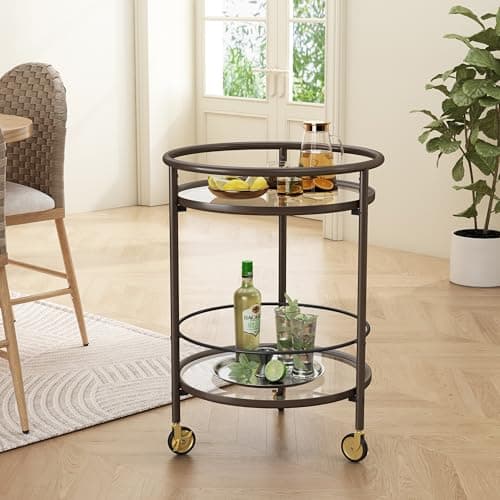
Top pick: Christopher Knight Home Keria Round Bar Cart (350916)
#ad Disclosure · Price as of October 18, 2026

Single model
Holly & Martin Zhori mid-century bar cart
33 by 18 by 37 inches, 33 lb, 25 lb per shelf, and a published figure for every shelf separately.
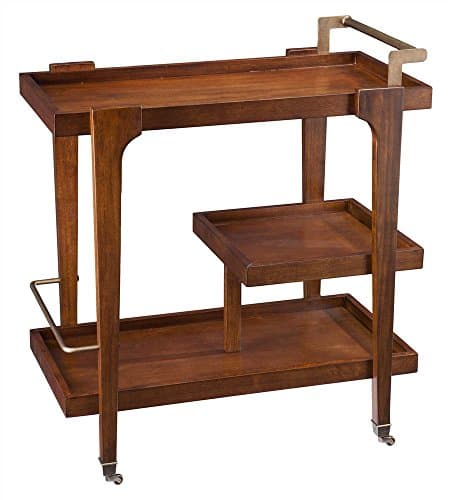
Top pick: Holly & Martin Zhori Midcentury Modern Bar Cart (HZ2031)
#ad Disclosure · Price as of October 18, 2026
Where to go next
If you do not know which model yet
Start with the constraint rather than the cart. If your room is tight, the small-cart roundup narrows the field to five in about a minute. If the finish is what matters, the gold roundup and the black one cover the two finishes people search for by name. If you own more wine than spirits, the wine-rack roundup is the right entry point.
And if you have not measured yet, do that first. The dimensions reference lists every published figure on this site with its source, and the three-minute fit check at the top of the flagship roundup will tell you which of these carts is physically possible in your room before you form an opinion about any of them.