Section 04 · Features
Bar cart or bar cabinet?
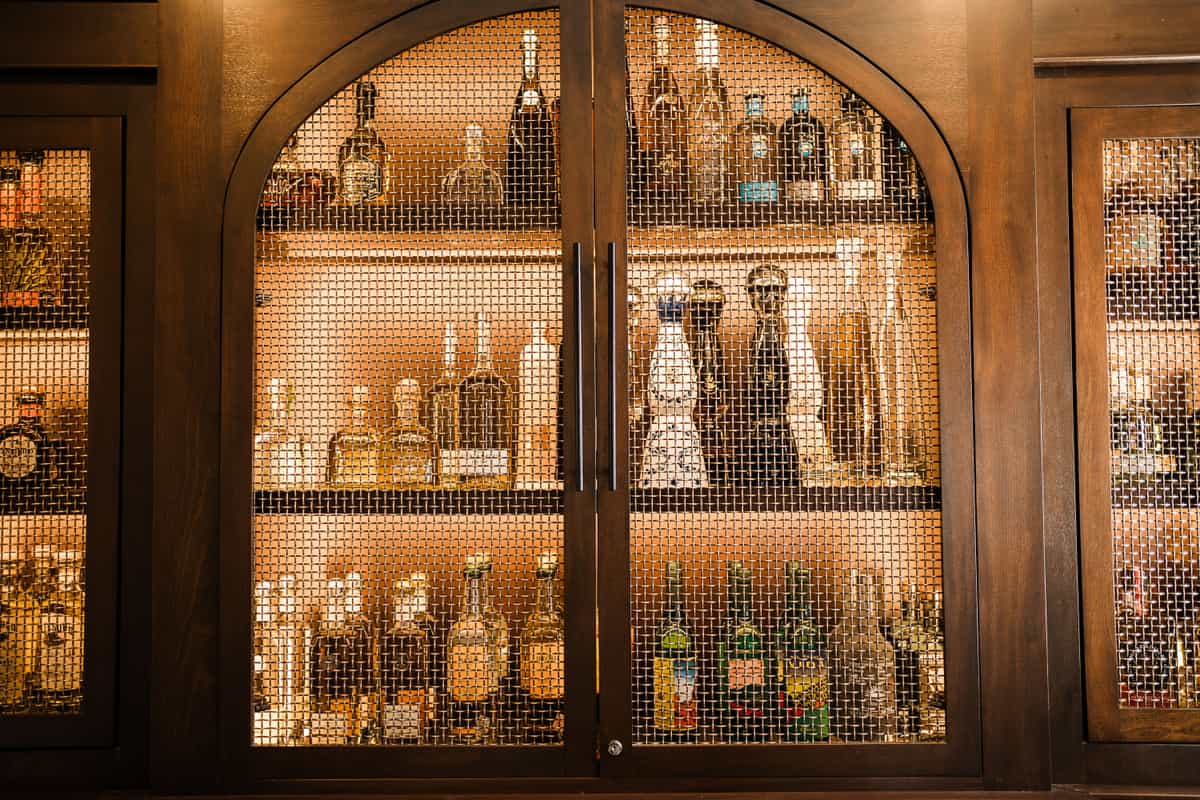
A cabinet hides the mismatched bottles, which is the honest reason most people want one. It also ends the thing that made a cart appealing.
We earn a commission if you buy through our links, at no extra cost to you. We have not tested these carts. Here is what we did instead.
The decision
Cart if you own six to ten bottles, cabinet if you own more
A cart's usable capacity is about six bottles per 24 inch shelf. Past roughly ten bottles a cart stops being a display and becomes a rack, and a rack is what cabinets are for. The other trigger is honest: if the collection is mismatched and you would rather not look at it, no amount of open shelving fixes that.
The size difference is larger than it looks
Bar carts in our library run 15 to 33.9 inches wide, 11 to 20 deep and 32 to 36.5 tall. Published bar cabinets are a different scale entirely — one example measures 50 inches wide by 20 deep by 56 tall, another 28 by 18 by 75. A cabinet is not a bigger cart; it is a different piece of furniture with a different footprint and a different visual weight in a room.
That matters for placement. A cart tucks into a gap and can be moved to reclaim the space. A cabinet at 50 or 75 inches is a wall decision, and it is not one you revisit casually.
What a cabinet gives you
- Concealment. The real reason, usually. A collection of mismatched bottles at different fill levels does not look like the photographs, and a door solves that instantly.
- Capacity. Several times a cart's, with vertical divisions that let you use height properly rather than losing it to shelf gaps.
- A worktop. Most cabinets have a solid top at a height you can actually mix on, and it is deeper than any cart's.
- Protection. From light, dust and — depending on the cabinet — from other people's children.
What a cabinet takes away
- Mobility. Completely. This is the whole feature of a cart and cabinets have none of it.
- The display. A cart announces itself as a bar. A closed cabinet is a cupboard until someone opens it, and a good deal of the appeal of a home bar is that it is visible.
- Casual use. An open cart invites you to pour someone a drink. A closed cabinet is one more decision.
- Footprint efficiency. A cart is roughly three square feet of floor. A cabinet is more, and it cannot be moved to get it back.
The middle option
A cart with a genuine rack and a deep shelf gets you closer to cabinet capacity without the commitment. The SONGMICS at 24.2 by 15.7 inches with a repositionable rack and a published 198.4 lb total load is the furthest-along version of that in our library — see bar carts with real storage.
The other middle option is a sideboard, which gives you the concealment and the worktop at a lower height and usually a lower price than a dedicated bar cabinet.
How to decide in one minute
- Count your bottles. Under ten: cart. Over fifteen: cabinet. Between: either, decided by the next two questions.
- Do you want to look at them? If the honest answer is no, buy the door.
- Does the object need to move? If yes, the cabinet is not an option regardless of the other two answers.
What I would buy
The picks this page points to
These sit here rather than at the top on purpose: the advice above is what decides the choice, and a recommendation only means something once you know what you are choosing between.
Bottle storage
SONGMICS Bar Cart with Flexible Wine Rack (ULRC291A02)
SONGMICS
The only cart here that publishes a whole-cart load figure as well as a per-tier one: 66.1 lb a tier and 198.4 lb in total. The wine rack repositions, which matters more than it sounds, because a fixed rack decides your bottle count for you.
- Dimensions
- 15.7"D x 24.2"W x 34.6"H
- Weight
- 27.3 lb
- Load per tier
- 66.1 lb (30 kg) static
- Total load
- 198.4 lb (90 kg) static
- Materials
- Alloy steel and engineered wood
Specs compiled from: SONGMICS ULRC291A02 published listing, retrieved 2026-09-02.
What is good
- Publishes a total load figure, which most listings in this category do not
- Repositionable wine rack, so the bottle count is yours to decide
- 34.6 inches tall sits inside the comfortable serving band
What is not
- Engineered wood marks where a wet glass sits, unlike glass or steel
- 27.3 lb with a 15.7 inch depth makes it firmly two-handed
- Wood-and-steel styling is neutral rather than characterful
The widest surface
Nathan James Sally Rolling Bar Cart
Nathan James
28 inches wide and 19 deep, the largest top surface in this registry, on a 34 inch frame that stays inside normal serving height. If you actually mix drinks rather than pour them, work surface is the spec that matters.
- Dimensions
- 19"D x 28"W x 34"H
- Weight
- 24 lb
- Weight capacity
- 66 lb
- Materials
- Black metal frame, glass shelves
- Tiers
- 2
Specs compiled from: Nathan James Sally published listing, retrieved 2026-09-02.
What is good
- 19 inches deep is the most working room of anything here
- 34 inches tall is a comfortable height to build a drink on
- 66 lb capacity on a 24 lb cart
What is not
- 28 by 19 inches is a real footprint, and it will not tuck anywhere
- Two tiers, so storage lives on the floor shelf or nowhere
- A dark frame plus glass shows dust more than a wood finish
How these were picked
I have not tested any of these carts. What I did instead: compiled the published specifications from each listing, recorded the figures with their source, checked the footprint against the clearances a real room has, worked out how many standard bottles a stated shelf actually holds, and named the one I would skip. Where two listings for the same cart disagree, the page says so rather than quietly picking one.
Frequently asked
Questions
Is a bar cart or bar cabinet better?
How many bottles can a bar cabinet hold?
Can a bar cabinet be moved?
Sources
Where the facts on this page came from
- Bar cabinet dimensions (50 x 20 x 56 in) — Room & Board linear bar cabinets
- Bar cart and cabinet size comparison — Loomlan bar cart guide
Specifications attributed to a retailer listing were read from that listing on the date shown on each product card. Listings change; if you find one that no longer matches what we published, tell us and we will check it and correct the page.
Read next
Related pages
Filed under Features. Permanent link: /features/bar-cart-vs-bar-cabinet