Section 04 · Features
Bar cart or sideboard?
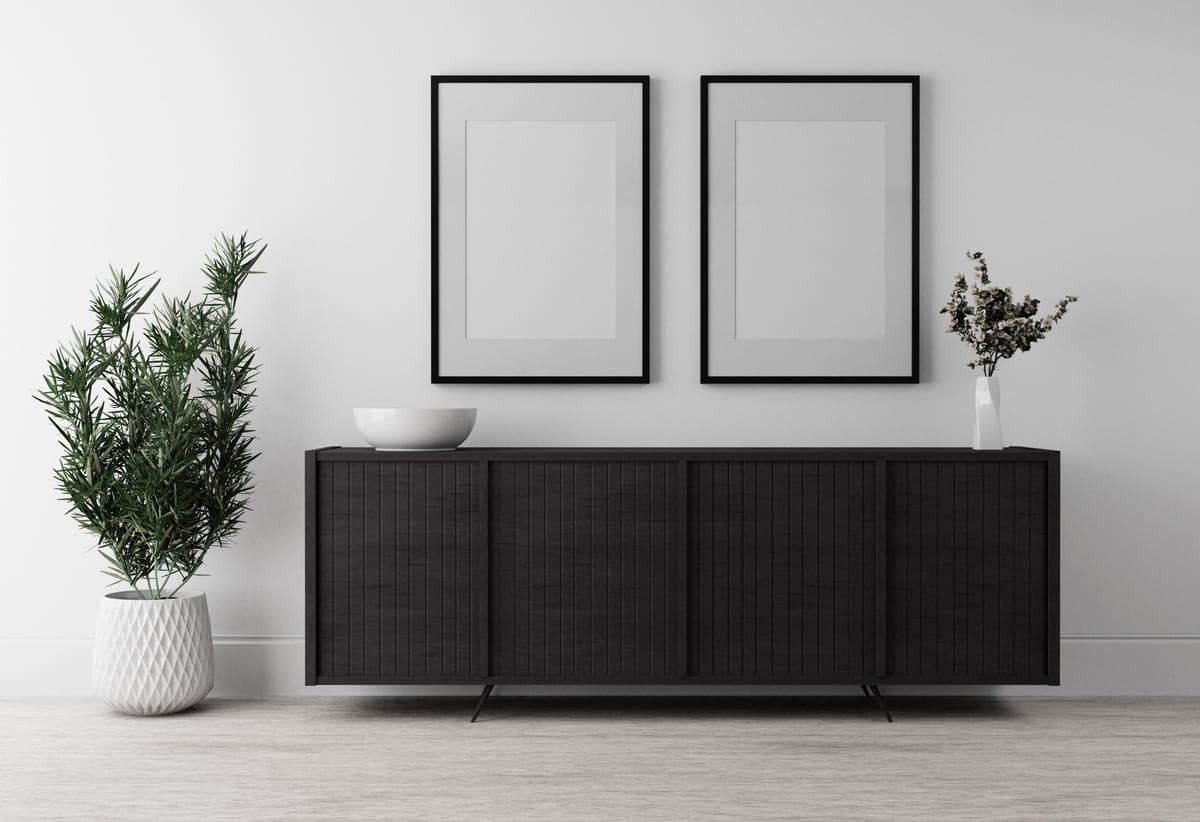
A sideboard is a longer, lower, closed version of the same idea. Which one you want comes down to surface area against mobility.
We earn a commission if you buy through our links, at no extra cost to you. We have not tested these carts. Here is what we did instead.
The decision
Sideboard if the wall is long and the cart never moves
A sideboard beats a cart on every measure except the two that made you want a cart: mobility and footprint. If the object is going against one wall and staying there, a sideboard gives you more surface, real concealed storage and a piece of furniture rather than an accessory.
The three real differences
1. Surface area, and it is not close
The widest cart in our library is 33.9 inches; the deepest is 20. A typical sideboard runs 48 to 72 inches long and 16 to 20 deep. That is roughly double the working surface, which changes what the object can do — a sideboard holds the bar and a lamp and a stack of books; a cart holds the bar.
2. Height, and this one cuts both ways
Sideboards sit lower, typically around 30 to 32 inches, against a cart's 32 to 36.5. Lower is better for mixing and worse for reaching: on a sideboard you are bending slightly to pour, and the bottles at the back are a stretch across a 20 inch depth.
The height argument for carts is in how tall a bar cart should be, and the short version is that the 32 to 36 inch band exists because it is between dining-table and counter height, which is where hands comfortably work.
3. Concealed storage
A sideboard's doors and drawers hold everything a cart displays: the spare bottles, the mismatched glasses, the bar towels, the cocktail book. That is genuinely useful and it is also the end of the display value — the same trade as a bar cabinet, at a lower height and usually a lower price.
Where a cart still wins
- Footprint. Three square feet against six or more. In a small room this decides it, and the small-cart options are in the small-cart roundup.
- Mobility. A cart goes to the party. A sideboard does not.
- Signaling. A cart reads as a bar immediately. A sideboard with bottles on it reads as a sideboard with bottles on it, which is a subtler and less fun thing.
- Cost. A sideboard is furniture-priced. A cart is accessory-priced, for the reasons in what bar carts cost.
The version most people actually want
A sideboard you already own, with a tray on it. That is the honest answer for a lot of rooms: the storage problem is solved by the furniture you have, and the display problem is solved by a 12 by 16 inch tray that groups the bottles into a single object.
That option and three others are in what to use instead of a bar cart. If you then want the mobility as well, a cart is an addition rather than a replacement — the bar lives on the sideboard, and the cart carries it to wherever people are.
This comparison lands hardest in one room, because it is the room both objects are sold for. Bar carts for dining rooms settles it on a single question — whether the thing has to move — and sets out the carts whose depth survives a wall with chairs in front of it.
What I would buy
The picks this page points to
These sit here rather than at the top on purpose: the advice above is what decides the choice, and a recommendation only means something once you know what you are choosing between.
The widest surface
Nathan James Sally Rolling Bar Cart
Nathan James
28 inches wide and 19 deep, the largest top surface in this registry, on a 34 inch frame that stays inside normal serving height. If you actually mix drinks rather than pour them, work surface is the spec that matters.
- Dimensions
- 19"D x 28"W x 34"H
- Weight
- 24 lb
- Weight capacity
- 66 lb
- Materials
- Black metal frame, glass shelves
- Tiers
- 2
Specs compiled from: Nathan James Sally published listing, retrieved 2026-09-02.
What is good
- 19 inches deep is the most working room of anything here
- 34 inches tall is a comfortable height to build a drink on
- 66 lb capacity on a 24 lb cart
What is not
- 28 by 19 inches is a real footprint, and it will not tuck anywhere
- Two tiers, so storage lives on the floor shelf or nowhere
- A dark frame plus glass shows dust more than a wood finish
Serving a crowd
VASAGLE Large Gold Bar Cart (ULRC083A02)
VASAGLE
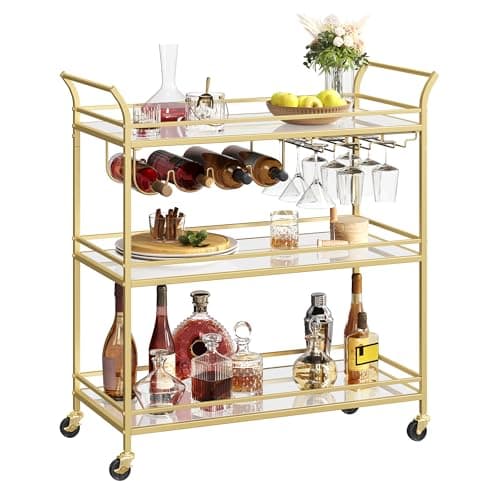
At 33.9 inches wide this stops being a side table and starts being a bar. Same 66 lb per-shelf rating as the small model, far more top-shelf area, and 36 lb of cart to shift when you want the room back.
- Dimensions
- 15"D x 33.9"W x 35.4"H
- Weight
- 36 lb (16.3 kg)
- Load per shelf
- 66 lb (30 kg) static
- Materials
- Steel frame, mirrored tempered glass
- Shelves
- 3, with wine and glass holders
Specs compiled from: VASAGLE ULRC083A02 published listing, retrieved 2026-09-02.
What is good
- 33.9 inches of width fits bottles and glassware without stacking
- Still only 15 inches deep, so it does not eat walkway the way its width suggests
- The published load rating did not drop as the shelf got wider
What is not
- 36 lb is a two-handed cart, and it will not roll easily on thick pile
- At nearly 34 inches wide it needs a wall it can own
- Overkill if you own fewer than about eight bottles
#ad Disclosure · Price as of October 18, 2026
How these were picked
I have not tested any of these carts. What I did instead: compiled the published specifications from each listing, recorded the figures with their source, checked the footprint against the clearances a real room has, worked out how many standard bottles a stated shelf actually holds, and named the one I would skip. Where two listings for the same cart disagree, the page says so rather than quietly picking one.
Frequently asked
Questions
Is a sideboard better than a bar cart?
How tall is a sideboard compared to a bar cart?
Can you use a sideboard as a bar?
Sources
Where the facts on this page came from
Specifications attributed to a retailer listing were read from that listing on the date shown on each product card. Listings change; if you find one that no longer matches what we published, tell us and we will check it and correct the page.
Read next
Related pages
Filed under Features. Permanent link: /features/bar-cart-vs-sideboard