Section 06 · Styling
A bar cart without the bar
Same trolley, different contents. Three setups that work — coffee, tea and mocktails — and the two problems only the non-alcoholic version has.
We earn a commission if you buy through our links, at no extra cost to you. We have not tested these carts. Here is what we did instead.
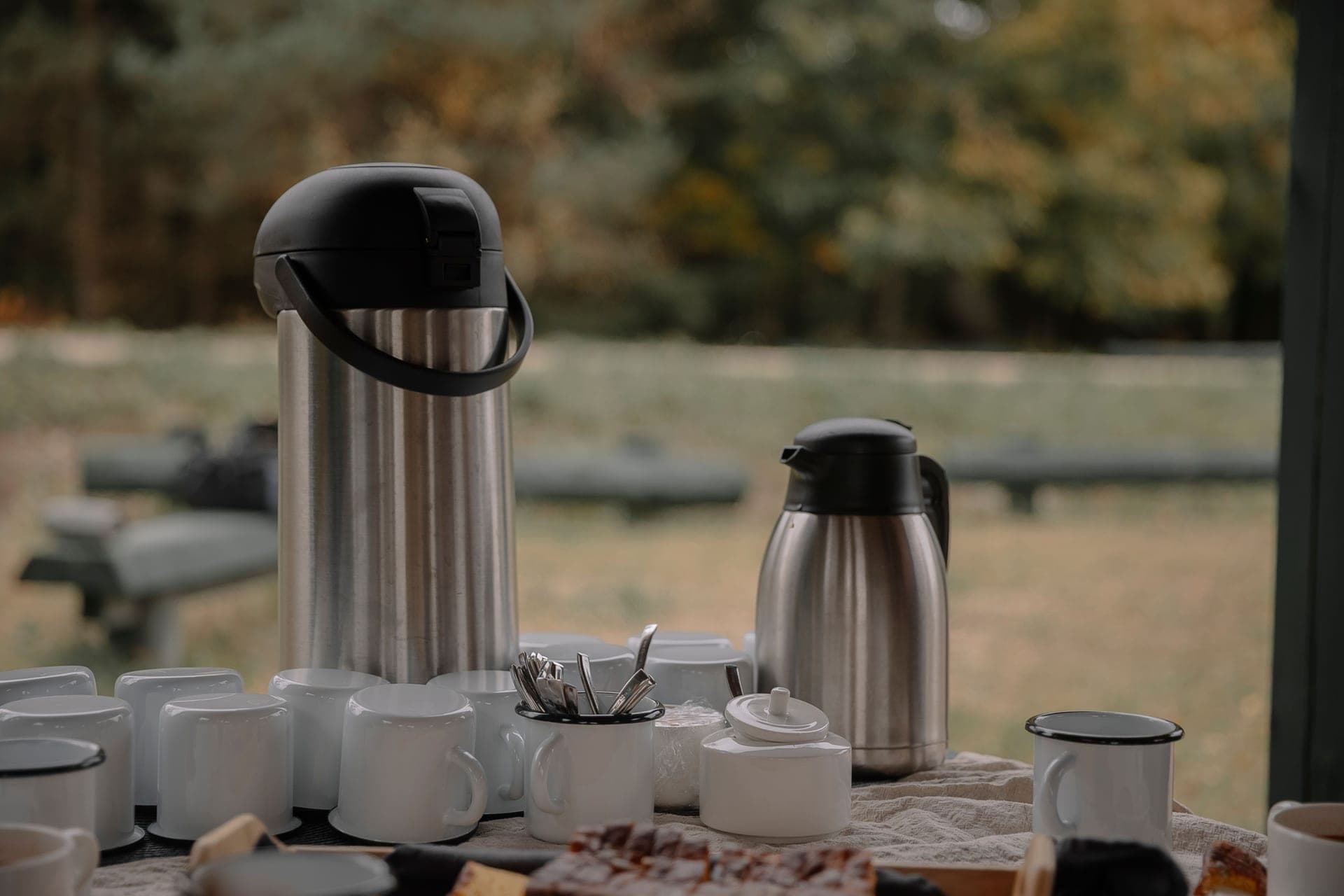
A bar cart is a wheeled side table with open shelves. Nothing about it is specific to alcohol, and a large and growing share of the carts people buy never hold any. The furniture works exactly the same way; what changes is the weight on the shelves and, in one case, the heat.
Three setups are worth building deliberately rather than by accident: the coffee cart, the tea cart, and the mocktail cart. They want different things from the trolley, and only one of them is straightforward.
The problem alcohol does not have: weight
This is the part that catches people out, and it is arithmetic rather than opinion.
A full 750 ml bottle weighs roughly 2.5 to 3 lb. A drip coffee maker is commonly 6 to 10 lb, an electric kettle around 3 lb empty and about 6 lb full, and a bean-to-cup machine can be 20 lb and upward. So a modest coffee setup — machine, kettle, a jar of beans, four mugs — lands somewhere near a six-bottle bar in weight, and a serious one exceeds anything a spirits cart will ever hold.
Now look at the ratings. Published per-shelf figures across our model library run from 33 lb to 150 lb, and a great many listings publish nothing. On a 33 lb shelf, a bean-to-cup machine plus water is most of the rating. This is the one context where a cart's load rating genuinely becomes the constraint rather than a comfort, and it is why the appliance goes on the bottom shelf — lower center of gravity, and on most carts the bottom shelf is the one sitting closest to the frame.
How to read those figures, and what happens when a shelf is over-loaded slowly rather than suddenly, is on bar cart weight capacity.
The other problem: heat and steam
A kettle and an espresso machine both vent steam upward. On a three-tier cart the shelf above is 8 or 9 inches from the spout, by the arithmetic on how much space is between bar cart shelves, and steam at that distance is a real problem for one specific material.
Engineered wood — particleboard or MDF with a grain applied — is the material most affordable carts use, and its weak point is exactly this: moisture entering through an unsealed cut edge, which on a shelf is the underside of the front lip. Repeated steam does the same thing a spill does, only slower and without you noticing.
Three ways round it, in order of how well they work. Put the kettle on the top shelf, where the only thing above it is the ceiling. Or use a two-tier cart, which has a single large gap. Or use a cart with glass or steel shelves, which do not care. If you want the warm look and the steam, the material distinctions on the wood cart page are worth reading before you buy.
The coffee cart
The most demanding of the three and the most rewarding, because a coffee setup on a trolley solves a genuine kitchen-counter problem: the machine, the beans, the grinder and the mugs stop being spread across three cupboards.
Bottom shelf: the machine, and the grinder if you have one. This is where the weight belongs. Top shelf: mugs, beans in a sealed jar, and the working surface. Middle shelf, if there is one: filters, a scale, the things you reach for less.
Two things to settle before you buy. First, the cord — a cart with a plugged-in appliance on it does not roll anywhere, so the coffee cart is really a compact sideboard that happens to have wheels. Second, the shelf gap: measure your machine's height against the published gap, because most drip machines are 12 to 14 inches tall and a three-tier cart's gap is around 8 or 9.
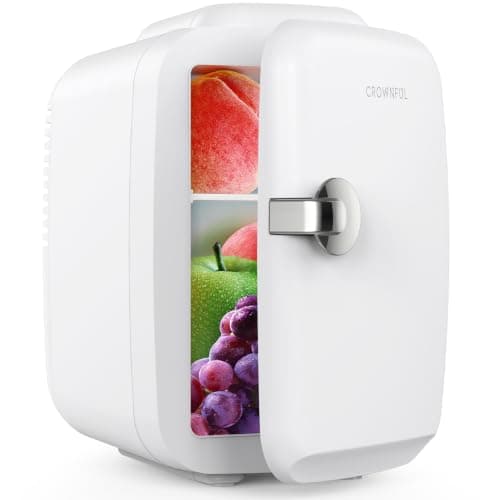
A cold option worth knowing about: the CROWNFUL 4-liter cooler here is 7.96 inches tall, which is the one powered box small enough to sit in a normal three-tier gap, and it warms as well as cools. On a coffee cart holding milk that is genuinely useful. The wider case against putting a fridge on a cart is on bar carts and mini fridges.
The tea cart
The easiest of the three, and the closest to what a trolley was originally for — the tea cart predates the bar cart and the two are the same object with a different name, which is the whole subject of bar cart versus tea cart.
A tea setup is light. A kettle, a pot, loose leaf in tins, cups and a strainer is perhaps 12 to 15 lb all in, which sits comfortably inside even a 33 lb shelf. The tins are the styling: a row of identical containers with different labels does the same visual job that a row of bottles does on a bar cart, which is to say it gives the eye repetition with variation.
The steam problem still applies to the kettle, and the answer is the same: top shelf, or a two-tier cart. What a tea cart gains over a coffee cart is that it can genuinely move — a filled pot on a tray goes to the sofa, and nothing needs to be plugged in once the water is boiled.
The mocktail cart
The one that looks most like a bar cart and behaves most like one, because it is one. The bottles are syrups, shrubs, tonics, bitters-free aromatics and non-alcoholic spirits, and they are the same shape and roughly the same weight as the alcoholic versions.
Which means everything on this site about stocking applies unchanged: the six-bottle logic on how to stock a bar cart works the same way, glassware is glassware, and the tools are identical. A shaker, a strainer and a jigger do exactly the same job for a mocktail as for a cocktail — arguably more, because a drink without alcohol has less structure and depends more on dilution and balance being right.
One genuine difference: tonics and mixers are mostly in bottles or cans that want to be cold, and there are more of them. That pushes a mocktail cart toward a bigger ice bucket than a spirits cart needs — the sizing argument is on ice buckets and tongs — and toward a cart with a rack, because rows of tall bottles standing up eat shelf area fast.
What to buy, and what not to bother with
The cart itself does not need to be different. The one on this page I would start with is the two-tier HOOBRO BF56TC01: 44 lb on each of two shelves and a single large gap rather than two small ones, which solves the appliance-height problem before it happens. Two shelves is also enough for any of these three setups.
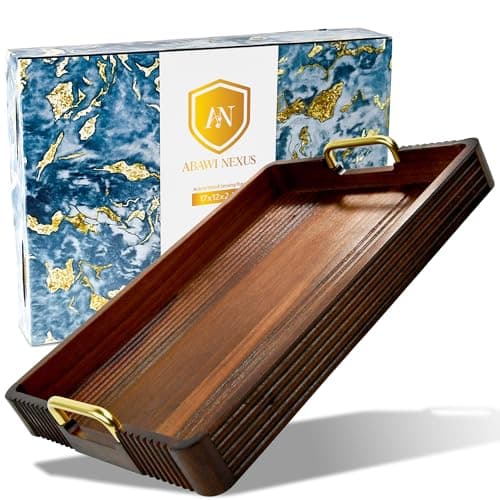
A tray earns its place more here than on a spirits cart, because a tea or coffee cart is carried from more often than it is poured at. The acacia tray here publishes an 11 lb limit, which is a real number and is roughly a pot, two mugs and a jug. Most trays publish nothing; the comparison is on bar cart trays.
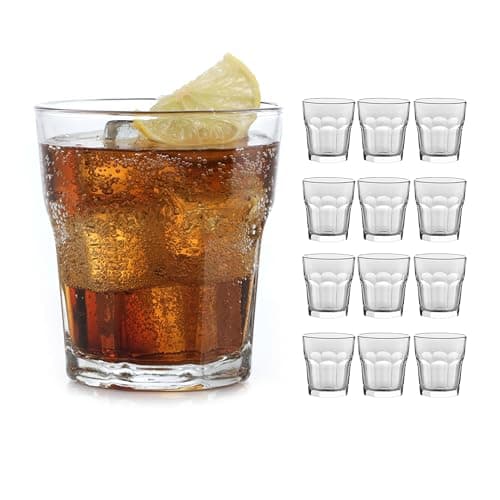
Glassware: rocks glasses do more work than anything else on a non-alcoholic cart, because iced coffee, a mocktail and a soft drink all go in the same vessel. Skip the specialist shapes. Bar cart glassware makes the case in full.
What not to bother with: a dedicated non-alcoholic version of anything. The tools are the tools. A shaker does not know what is in it.
Before you set one up
Weigh the heaviest thing that is going on it and check that against the published shelf rating — this is the setup where that figure actually binds. Measure the tallest appliance against the shelf gap. Decide whether anything needs mains power, and if it does, accept that the cart has become furniture and put it where a socket is.
Then style it the same way you would any cart: fewer objects, one tray, and the things you use every day at the front. The method is the same whatever is in the bottles — how to style a bar cart applies without modification.
One room takes this further than any other, because a cart there is working furniture for eight hours before it is anything else. Bar carts for home offices covers the coffee-and-printer version of the same object, including the one measurement that decides where it can go: a desk publishes 28 to 30 inches and every cart is taller.
What I would buy
The picks this page points to
These sit here rather than at the top on purpose: the advice above is what decides the choice, and a recommendation only means something once you know what you are choosing between.
A first cart
HOOBRO 2-Tier Bar Cart (BF56TC01)
HOOBRO
Two shelves, 16.7 lb, 44 lb rated on each. The lowest-commitment cart in this registry and the one I would put in a rented flat: light enough to move weekly, cheap enough that a scratch is not a crisis.
- Dimensions
- 24.4"L x 13.8"W x 33.1"H
- Weight
- 16.7 lb
- Load per shelf
- 44 lb top, 44 lb bottom
- Materials
- Particleboard and metal frame
- Shelves
- 2
Specs compiled from: HOOBRO BF56TC01 published listing, retrieved 2026-09-02.
What is good
- 16.7 lb moves with one hand, which is the entire point of a cart
- 33.1 inches tall sits close to the middle of the published range
- Two shelves means less to style badly
What is not
- 44 lb a shelf is the lowest rating here, roughly nine full 750 ml bottles
- Particleboard edges are the first thing to fail on a cart that gets knocked
- No wine rack or stem holder, so glasses eat shelf area
The one that carries
Abawi Nexus Acacia Serving Tray, 17 x 13 in
Abawi Nexus
Acacia with metal handles, 17 by 13 inches, and — rarest of all in this category — a published weight limit of 11 lb. Eleven pounds is roughly four full bottles, which is the only tray here that can honestly be described as one you carry rather than one you arrange.
- Dimensions
- 17"L x 13"W x 2"H
- Weight
- 1.11 kg (about 2.4 lb)
- Maximum load
- 11 lb
- Materials
- Acacia wood, metal handles
- Finish
- Dark acacia with gold handles
Specs compiled from: Abawi Nexus acacia serving tray published listing, retrieved 2026-09-06.
What is good
- 11 lb published limit, about four full 750 ml bottles
- Acacia takes a knock and a spill better than any board tray here
- 2 inch sides, high enough to stop a glass sliding off in transit
What is not
- 17 by 13 inches will not sit flat on a cart shallower than about 14 inches
- Wood needs occasional oiling if it lives somewhere sunny
- The gold handles are a style commitment, not a neutral choice
#ad Disclosure · Price as of October 17, 2026
Fitting an actual gap
CROWNFUL 4-Liter Mini Fridge (CF-PC4LBLK)
CROWNFUL
4.4 lb and under 8 inches tall, which is the only fridge here that fits in the shelf gap of a normal three-tier cart. It is a thermoelectric cooler holding six cans, so treat it as a way to keep two mixers cold rather than as refrigeration.
- Dimensions
- 5.33"D x 6.05"W x 7.96"H
- Weight
- 4.4 lb
- Capacity
- 4 L, listed as 6 cans
- Cooling
- Thermoelectric, cools and warms
- Listing
- ETL listed
Specs compiled from: CROWNFUL CF-PC4LBLK published listing, retrieved 2026-09-06.
What is good
- 7.96 inches tall fits the roughly 8 inch gap a three-tier cart actually has
- 4.4 lb is nothing on any shelf, rated or not
- It warms as well as cools, which is genuinely useful on a coffee cart
What is not
- Thermoelectric cooling works off ambient temperature, so a warm room limits it
- Six cans is two drinks each for three people and then it is empty
- 5.33 by 6.05 inches means no bottle taller than a can goes in it
#ad Disclosure · Price as of October 17, 2026
The one glass to own
Libbey Gibraltar DuraTuff Double Old Fashioned, 12 oz
Libbey
If you buy one shape, buy this one. A 12 oz double old fashioned takes spirits neat, spirits on ice, a short highball and water. The DuraTuff rim treatment is why these survive dishwashers in bars.
- Capacity
- 12 oz
- Type
- Double old fashioned / rocks
- Rim
- DuraTuff heat-treated
- Sold as
- Set of 12
- Care
- Dishwasher safe
Specs compiled from: Libbey Gibraltar DuraTuff published listing, retrieved 2026-09-02.
What is good
- 12 oz covers more drinks than any other single shape
- The heat-treated rim is the part that normally chips first
- Short glasses stand safely under a cart shelf
What is not
- Twelve is a lot of glasses for two shelves
- Heavy bases add up fast against a 44 lb shelf rating
- Plain restaurant styling, deliberately
#ad Disclosure · Price as of October 17, 2026
Keeping tools upright
KITESSENSU Cocktail Shaker Set with Stand
KITESSENSU
The reason to buy a set with a stand is not looks, it is footprint. Standing tools use vertical space, and vertical space is the one thing a bar cart has spare. This is the version of that idea I would start with.
- Type
- Bartender kit with stand
- Shaker
- Boston-style tins
- Includes
- Shaker, strainer, jigger, spoon, muddler, tongs, pourers
- Material
- Stainless steel
- Storage
- Upright stand
Specs compiled from: KITESSENSU bartender kit published listing, retrieved 2026-09-02.
What is good
- A stand turns eight loose tools into one object
- Boston tins strain faster and seal better than cobbler shakers
- Everything visible means you actually use it
What is not
- The stand itself needs roughly a 5 inch square of shelf
- Stands put the tallest thing on your cart at eye level
- Boston tins take practice to break the seal
How these were picked
I have not tested any of these carts. What I did instead: compiled the published specifications from each listing, recorded the figures with their source, checked the footprint against the clearances a real room has, worked out how many standard bottles a stated shelf actually holds, and named the one I would skip. Where two listings for the same cart disagree, the page says so rather than quietly picking one.
Frequently asked
Questions
Can you use a bar cart for coffee?
Will steam from a kettle damage a bar cart?
What goes on a non-alcoholic bar cart?
Is a tea cart the same as a bar cart?
Sources
Where the facts on this page came from
Specifications attributed to a retailer listing were read from that listing on the date shown on each product card. Listings change; if you find one that no longer matches what we published, tell us and we will check it and correct the page.
Read next
Related pages
Filed under Styling. Permanent link: /styling/bar-cart-without-alcohol