Section 05 · Stocking
Whiskey stones or big ice?
Stones promise cold without dilution. The manufacturers' own numbers show how little cold they actually deliver. Here is what the physics says, and what to buy instead.
We earn a commission if you buy through our links, at no extra cost to you. We have not tested these carts. Here is what we did instead.
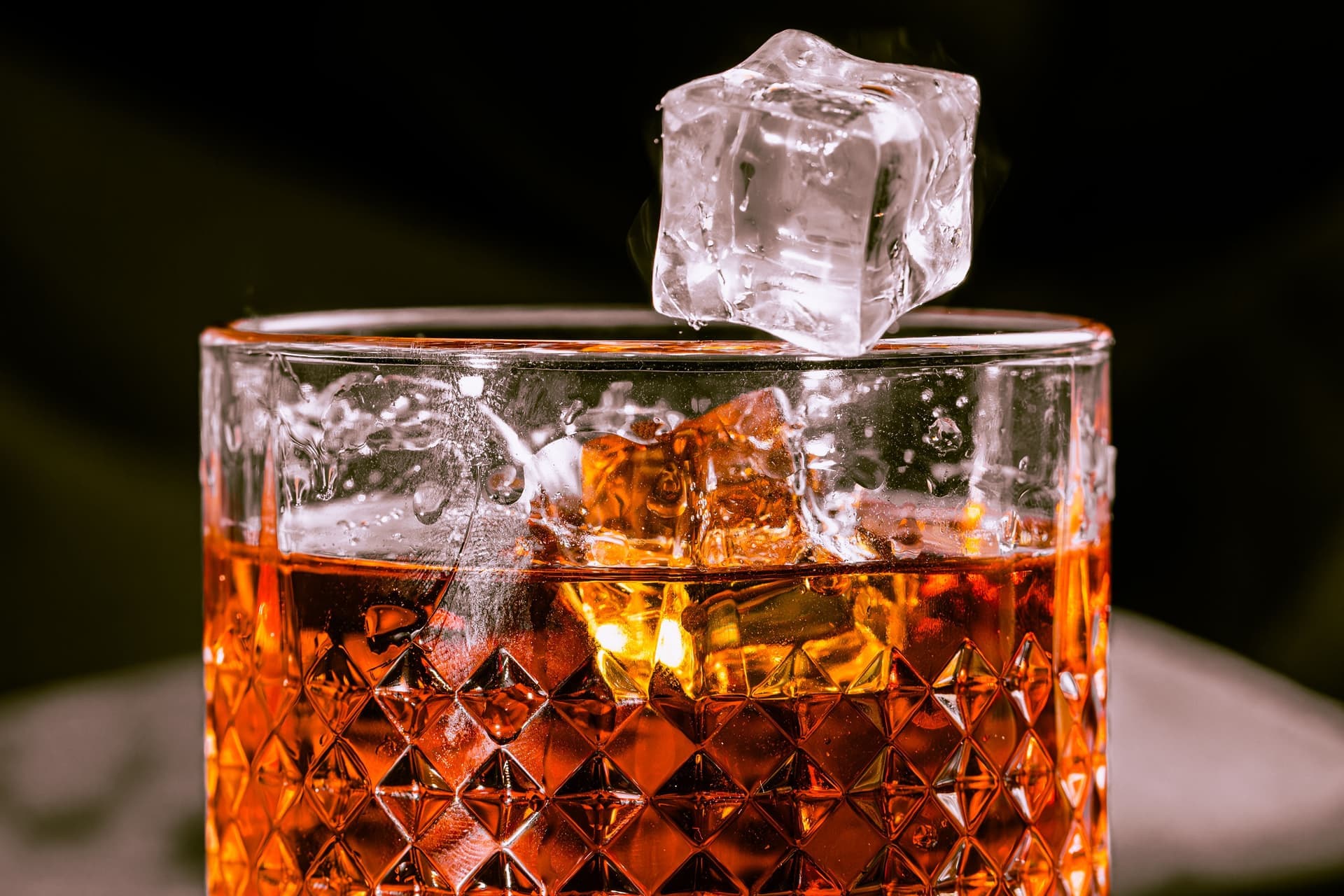
Whiskey stones are one of the most-given gifts in this whole category, and the promise is appealing: cold without dilution. The problem is that the promise is mostly not kept, and you do not need to take my word for it — one of the sets on this page publishes the number itself.
The Kollea listing states that two to three of its stainless cubes bring 250 ml of whiskey to 18 °C, or 64.4 °F, in about 45 seconds. Read that again. 64.4 °F is cellar temperature. It is cooler than a warm room and it is not what anybody means by a cold drink. That is the manufacturer being straightforward, and it is the single most useful figure on this page.
So the recommendation is the WIBIMEN 2.5-inch mold: big ice, slowly melting, which actually chills. Stones have a narrower job, described below, and two of them here are worth owning for it.
Why stones chill so much less than ice
It comes down to a difference in how the two absorb heat, and the gap is not small — it is roughly an order of magnitude.
A stone or a steel cube only warms up. It absorbs heat by rising in temperature, and it stops taking heat from the drink as soon as it reaches the drink's temperature. Granite and stainless both hold a modest amount of heat per degree, so a few cubes from the freezer have a small, quickly exhausted capacity.
Ice melts, and melting is where the work happens. Changing from solid to liquid absorbs a large amount of energy at a constant temperature — far more than warming the same mass of anything by a few degrees. That is why ice keeps pulling heat out of a drink long after a stone has given up, and why a glass with ice in it stays cold rather than settling.
The practical consequence is the Kollea number. Stones take the edge off. Ice makes a drink cold. Anyone who tells you stones are a straight substitute is describing a product they have not compared.
So why buy stones at all?
Because dilution is a real thing and some drinks genuinely suffer from it — and because a bar cart has a specific problem that stones happen to solve.
A cart has no freezer. That is the constraint this site keeps coming back to. Ice on a cart means a bucket, and a bucket means ice that is melting from the moment it is filled — about an hour of useful life, as worked out on ice buckets and tongs. Stones live in the freezer and come out two at a time, so there is nothing to melt, nothing to drain and no bucket occupying a shelf.
Cask-strength and high-proof spirits are where it matters. If you are drinking something at 55 to 60 percent and you want it slightly cooler but not opened up with water, a couple of steel cubes do exactly that job.
And they do not water down a pour you paid for. That is the whole pitch, and it is true — it is just that what you get in exchange is cellar temperature rather than cold.
What I compared them on
Mass, and how it is divided. Chilling capacity follows total mass, but a handful of small pieces warms up faster than the same mass in two large ones. Two jumbo cubes beat eight thin ones, which is the opposite of how these sets are usually sold.
Material. Stainless is denser, holds no flavor, will not chip a rim and is dishwasher safe. Granite is the traditional choice, looks better sitting out, and is softer on glass if it is properly polished.
For the molds: the size of the ice they make. A larger sphere or cube has less surface area for its volume, so it melts more slowly and dilutes less — which is the honest way to get most of what stones promise while actually being cold.
Whether it fits the glass. A 2.5-inch sphere does not fit every rocks glass. This is the failure people discover after freezing a tray, so measure the rim before you buy the bigger mold — the glasses on this site are listed with their dimensions on bar cart glassware.
The five, and who each is for
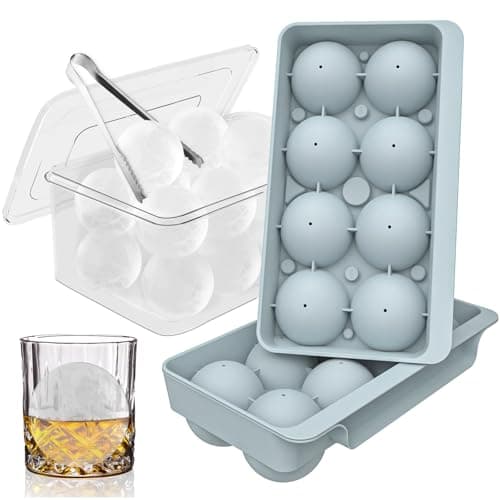
The pick (WIBIMEN 2.5-inch molds). Two molds making tennis-ball-sized spheres, in rigid food-grade plastic rather than floppy silicone, with a lid that lets you fill the tray in one pour and twist the ice out afterwards. A 2.5-inch sphere is the slowest-melting ice on this page and the closest thing to cold-without-dilution that actually works. Three honest costs: it does not fit a narrow rocks glass, each mold is nearly 11 inches across in the freezer, and two spheres per mold is not a party quantity.
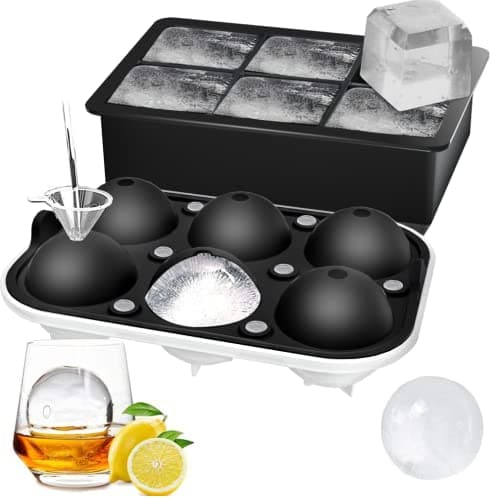
The practical one (Rottay 2-inch trays). Six 2-inch spheres and six 2-inch cubes across two lidded silicone trays, for a fraction of the price. Two inches is the size that fits a standard rocks glass, which makes this the more useful mold for most people even though the ice melts a little faster than the 2.5-inch. Silicone flexes, so a full tray takes two hands, and silicone picks up freezer odors if it is not washed.
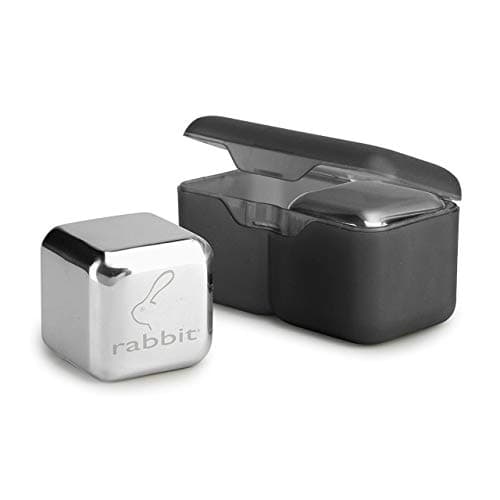
The best stones (Rabbit Jumbo, set of 2). Two 1.5-inch stainless cubes rather than a handful of small ones — which is the right way round, because mass concentrated in fewer pieces stays cold longer. Food-grade stainless, dishwasher safe, no flavor. It still chills far less than ice, steel clinks hard against a thin crystal rim, and it is useless if you forgot to put it in the freezer.
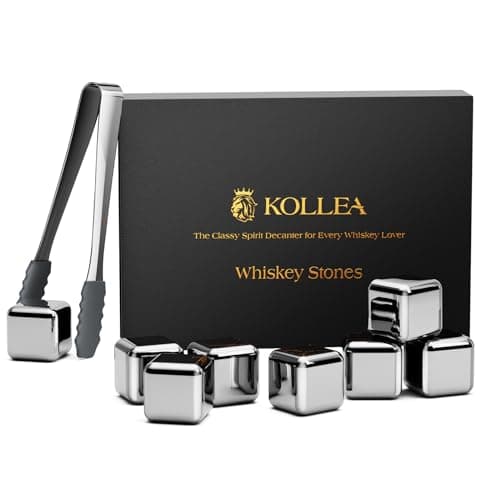
The honest one (Kollea 8-pack). Eight 304 stainless cubes with tongs and a freezer tray, and the only listing in this group that publishes what it achieves: 250 ml to 18 °C in about 45 seconds. Credit for stating it. The tongs are genuinely useful — steel cubes straight from the freezer are unpleasant to handle — but eight small cubes warm faster than two large ones, and 18 °C is the number that makes the case against the whole product class.
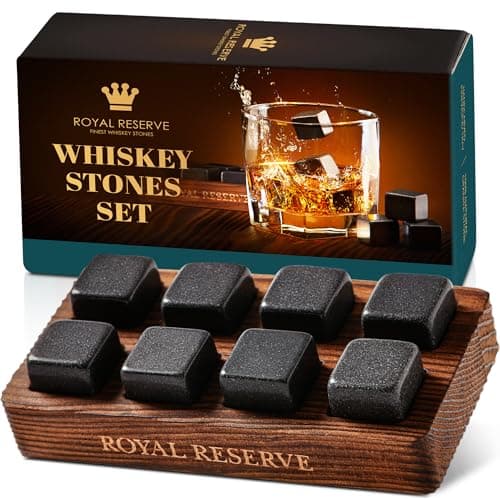
The one that looks right on a cart (Royal Reserve granite). Eight polished black granite cubes on a wooden tray, which is the version designed to sit out rather than hide in the freezer — and on an open cart that matters. Polished granite is gentler on a thin rim than steel. It carries less chilling mass than steel for the same size, the listing asks for three to four hours of freezing, and eight small stones is the divided-mass problem again.
How much of either you actually need
Both of these products are sold in quantities that have more to do with gift-boxing than with use.
Stones: two per glass, and six in the freezer. Two large cubes is the working number for a single pour — more than that and you are displacing the drink rather than chilling it, which is a genuine problem in a glass holding two fingers of whiskey. Six in the freezer covers three drinks before you need to wash and refreeze, and three drinks is a realistic evening. The eight-piece sets are sized for a box, not for a bar.
Ice: one large piece per drink, four in the freezer. A single 2-inch sphere fills a rocks glass properly, and a second one would not fit anyway. The reason to keep four rather than two is turnover — each mold takes several hours to freeze, so the tray you emptied tonight is not available again until tomorrow.
Which points at the real constraint on both products, and it is not the product. It is freezer space and forward planning. Stones need to be frozen and returned; large molds are bulky and slow. If neither of those fits your household, the honest answer is a bucket of ordinary ice brought out when people arrive — the capacity arithmetic for that is on ice buckets and tongs.
Making big ice without a freezer at the cart
The molds are the easy half. Getting the ice to the cart is the part that needs a plan, because a cart has no cold storage at all.
Freeze in the kitchen, carry in a bucket. A lidded bucket full of large ice lasts substantially longer than the same bucket of cubes, because there is less surface area exposed to the air. That extends the useful hour meaningfully.
Big ice also survives the trip better. Small cubes fuse into a block as they partially melt and refreeze against each other. Spheres and two-inch cubes stay separate, so the last drink of the evening still gets a usable piece of ice.
Clear ice is a different project. The cloudiness in home ice is trapped air and it is cosmetic, not a flavor problem. Directional freezing kits exist; none of them is on this page because none of them is a bar cart purchase.
Before you order
Measure the inside rim of the glass you actually drink from and buy the mold that fits it — 2 inches is safe almost everywhere, 2.5 inches is not. Then buy stones only if you drink high-proof spirits neat and genuinely object to water, and buy the two-large-cubes version rather than the eight-small-cubes one.
And if the cart is where drinks get made rather than poured, the ice bucket is the real purchase, not either of these — sizes and how long ice lasts are on ice buckets and tongs.
What I would buy
The picks this page points to
These sit here rather than at the top on purpose: the advice above is what decides the choice, and a recommendation only means something once you know what you are choosing between.
The biggest sphere here
WIBIMEN 2.5-Inch Round Ice Cube Molds, 2-Pack (ICBT2023B)
WIBIMEN
Two-and-a-half inch spheres — tennis-ball sized — with a lid that squeezes out the excess so you fill the tray rather than each cavity. A sphere this big is the single most effective thing on this page at chilling a drink slowly.
- Ice size
- 2.5" spheres
- Count
- 2 molds
- Material
- Food-grade plastic, not silicone
- Fill
- Pour and close the lid
- Release
- Twist
Specs compiled from: WIBIMEN ICBT2023B published listing, retrieved 2026-09-27.
What is good
- 2.5 inches is the largest ice here and melts the slowest for its volume
- Rigid material twists to release rather than needing to be peeled
- Lid means you fill the tray once, not cavity by cavity
What is not
- A 2.5-inch sphere does not fit a narrow rocks glass — measure the rim first
- The molds take real freezer space, 10.91 by 6.29 inches each
- Two spheres per mold is not a party quantity
#ad Disclosure · Price as of October 18, 2026
Both shapes, cheapest
Rottay Ice Cube Trays, 2-Inch Spheres and Cubes, 2-Pack
Rottay
Six 2-inch spheres and six 2-inch cubes across two silicone trays with lids, for less than the price of one premium mold. Two inches is the practical size: big enough to melt slowly, small enough to fit a normal rocks glass.
- Ice size
- 2" spheres and 2" cubes
- Count
- 6 of each, 2 trays
- Material
- Silicone with lids
- Care
- Freezer, microwave and dishwasher safe
- Tray size
- 7" x 4.5" x 2"
Specs compiled from: Rottay 6+6 set published listing, retrieved 2026-09-27.
What is good
- Two inches fits a standard rocks glass where 2.5 inches does not
- Twelve pieces of large ice is a genuine party quantity
- Lidded trays stack without the ice picking up freezer smells
What is not
- Silicone flexes, so a full tray needs two hands to move
- Silicone holds odors over time if it is not washed
- 2-inch ice melts faster than the 2.5-inch spheres
Two big ones, not eight small
Rabbit Jumbo Chilling Stones, Stainless Steel, Set of 2 (W9962N)
Rabbit
Two 1.5-inch stainless cubes rather than the usual handful of small ones, which is the right way round: chilling power follows mass, and two jumbo cubes carry more of it than eight thin ones. Food-grade steel, dishwasher safe, no flavor.
- Size
- 1.5" cubes
- Count
- 2
- Material
- Food-grade stainless steel
- Care
- Dishwasher safe
- Weight
- 0.22 lb
Specs compiled from: Rabbit W9962N published listing, retrieved 2026-09-27.
What is good
- Two large cubes carry more mass than a handful of small ones
- Stainless holds no flavor and will not chip a glass the way stone can
- Dishwasher safe and rust resistant
What is not
- Chills far less than ice of the same size — physics, not a defect
- Steel clinks hard against a thin crystal glass
- Needs freezer space and planning; useless if you forgot
#ad Disclosure · Price as of October 18, 2026
The set that publishes a number
Kollea Stainless Steel Chilling Cubes, 8-Pack with Tongs and Tray
Kollea
Eight 304 stainless cubes with tongs and a freezer tray, and the one listing in this group that publishes what the product actually achieves: two to three cubes bring 250 ml of whiskey to 18 °C in about 45 seconds. Read that number carefully.
- Material
- 304 stainless steel
- Count
- 8, plus tongs and freezer tray
- Published effect
- 250 ml to 18 °C / 64.4 °F in ~45 s, 2–3 cubes
- Care
- Rinse and dry
- Storage
- Tray included
Specs compiled from: Kollea 8-pack published listing, retrieved 2026-09-27.
What is good
- Publishes an actual temperature claim, which nothing else here does
- Tongs included, so you are not fishing cubes out with fingers
- 304 stainless is the food-grade standard and will not corrode
What is not
- 18 °C is cellar temperature, not a cold drink — the number is the argument against stones
- Eight small cubes warm faster than two large ones
- The freezer tray is one more thing to store
#ad Disclosure · Price as of October 18, 2026
The look on a cart
Royal Reserve Granite Whiskey Stones, Set of 8
Royal Reserve
Eight polished black granite cubes on a wooden tray, which is the version of this product designed to sit out on a cart rather than hide in a freezer. Natural stone, non-porous, and the listing asks for three to four hours of freezing.
- Material
- Natural black granite
- Count
- 8, with wooden tray
- Freeze time
- 3–4 hours, per the listing
- Finish
- Polished, to protect glassware
- Warranty
- 1 year, per the listing
Specs compiled from: Royal Reserve whiskey stones published listing, retrieved 2026-09-27.
What is good
- A wooden tray means it can live on the cart instead of the freezer
- Polished granite is gentler on a thin rim than an unfinished stone
- Non-porous, so it holds no flavor between drinks
What is not
- Granite carries less chilling mass than steel of the same size
- Three to four hours of freezing is a planning problem, not a product
- Eight small stones chill less than two large ones of the same total mass, because each warms faster
#ad Disclosure · Price as of October 18, 2026
How these were picked
I have not tested any of these carts. What I did instead: compiled the published specifications from each listing, recorded the figures with their source, checked the footprint against the clearances a real room has, worked out how many standard bottles a stated shelf actually holds, and named the one I would skip. Where two listings for the same cart disagree, the page says so rather than quietly picking one.
Frequently asked
Questions
Do whiskey stones actually work?
Why does ice chill better than a whiskey stone?
Are stainless steel or granite whiskey stones better?
What size ice ball fits a rocks glass?
Sources
Where the facts on this page came from
Specifications attributed to a retailer listing were read from that listing on the date shown on each product card. Listings change; if you find one that no longer matches what we published, tell us and we will check it and correct the page.
Read next
Related pages
Filed under Stocking. Permanent link: /stocking/whiskey-stones-vs-ice-molds