Section 05 · Stocking
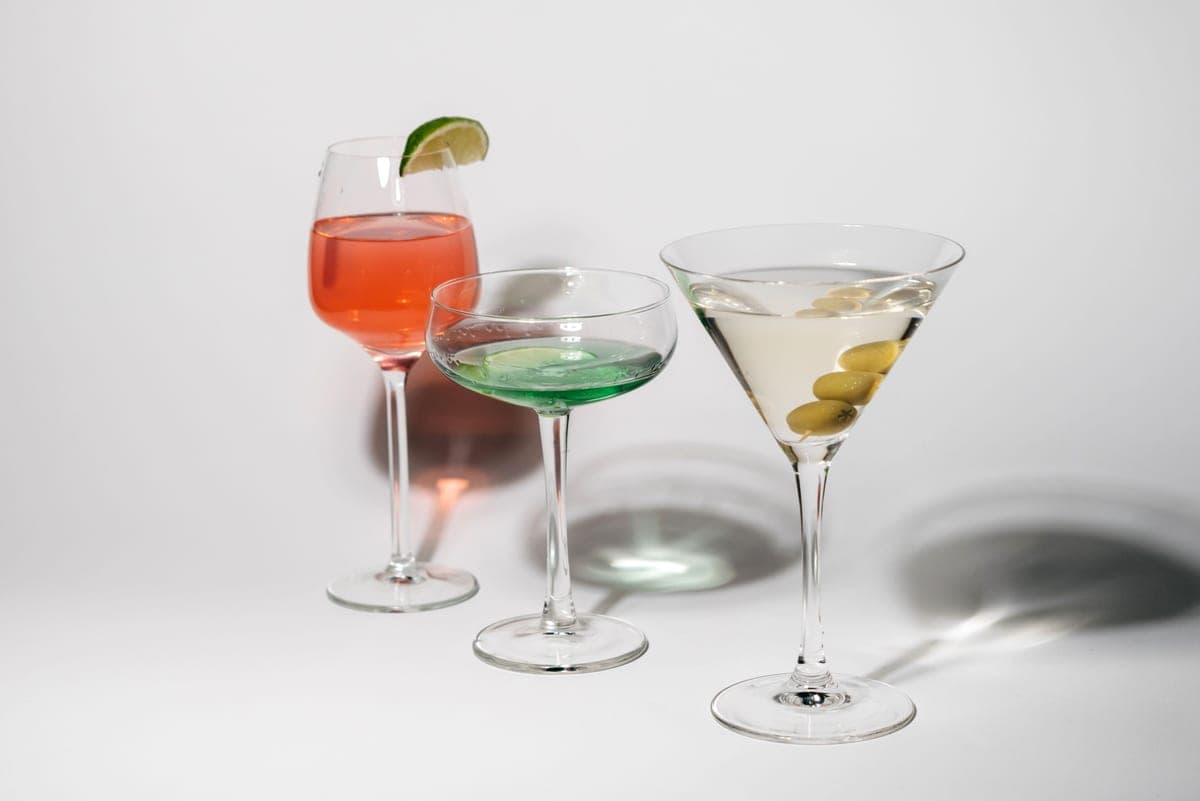
Coupe or martini glass?
On a cart specifically, this is not close. A martini glass has the worst stability profile of any common glass, on the one piece of furniture that moves.
We earn a commission if you buy through our links, at no extra cost to you. We have not tested these carts. Here is what we did instead.
The decision
Coupe, on a cart, without much argument
Both glasses serve the same drinks. The difference that matters on a bar cart is geometry: a coupe has a bowl that curves inward and a base proportionate to its rim, and a martini glass has a wide flat rim over a narrow stem. On something with wheels, that is the whole argument.
The geometry
A Libbey Perception coupe is published at 6 inches tall, 3 3/4 inches across the rim and 3 inches at the base. That base-to-rim ratio — 0.8 — is what makes it stable.
A martini glass inverts that. The bowl is a cone that is widest at the very top, so the mass of liquid sits at the highest point over a comparatively small foot. It is a design that assumes a still surface.
A bar cart is not a still surface. It has wheels, it gets nudged, and a light cart moves when someone leans on it — which is what people do while pouring. The coupe survives that and the martini glass is a coin flip.
The spill difference
The other half is what happens before the glass tips. A coupe's bowl curves inward toward the rim, so the liquid has a lip to climb. A martini glass's walls flare outward, so any tilt at all sends the surface over the edge.
This is why the coupe is having a revival in bars, and it is not nostalgia: it is easier to carry across a room full of people.
Where the martini glass wins
Two places, honestly.
The aroma. A wide flat surface presents more of the drink to your nose, which genuinely matters for something aromatic and spirit-forward.
The signal. A martini glass says cocktail from across a room in a way nothing else does. If the cart is substantially for looking at, that is a real consideration, and if it is, put two on it and keep them at the back.
Storage, on a cart
Coupes stack loosely and nest a little; martini glasses do neither, and their wide rims mean each one occupies its full 4-plus inch diameter of shelf. Four martini glasses is around 16 inches of shelf width, which on a 24 inch shelf is most of it.
Coupes also come short. The Libbey Embassy at 4 1/2 inches stands under almost any shelf gap, which is the single most useful property a glass can have on a three-tier cart. Martini glasses are almost universally tall. Heights for everything are in the glassware roundup.
The period argument
If you are building a genuinely deco cart, the coupe is period-correct and the martini glass is a much later shape. That is a minor point unless you care about it, and if you care about it, it settles the question entirely.
What I would buy
The picks this page points to
These sit here rather than at the top on purpose: the advice above is what decides the choice, and a recommendation only means something once you know what you are choosing between.
The everyday coupe
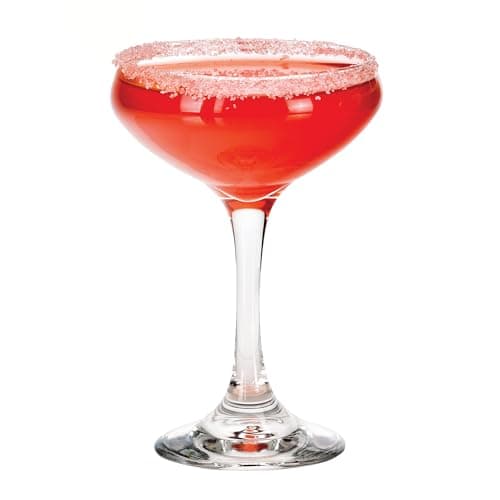
Libbey Perception Cocktail Coupe, 8.5 oz (3055)
Libbey
8.5 ounces, six inches tall, 3.75 inches across the rim. It is the coupe most bars actually use, and the six-inch height is the number that decides whether it stands upright under your cart's next shelf.
- Capacity
- 8.5 oz
- Height
- 6"
- Top diameter
- 3 3/4"
- Base diameter
- 3"
- Sold as
- Case of 12
Specs compiled from: Libbey 3055 published specification, retrieved 2026-09-02.
What is good
- 8.5 oz holds a full cocktail plus dilution without reaching the rim
- Restaurant-grade glass, so replacements are easy to buy singly
- The 3" base is stable on a rolling cart
What is not
- At 6" tall it will not stand under a shelf gap much below 8"
- Wide rims spill more than a martini glass when a cart is pushed
- A case of 12 is more coupes than most homes need
Low shelf gaps
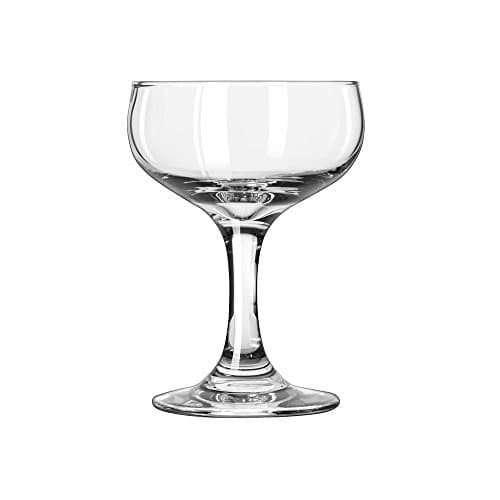
Libbey Embassy Coupe, 5.5 oz (3773)
Libbey
The short coupe, and the reason to care is 4.5 inches. That is an inch and a half shorter than the Perception, which is often the difference between glasses standing on a cart shelf and glasses living in a cupboard.
- Capacity
- 5.5 oz
- Height
- 4 1/2"
- Top diameter
- 3 1/4"
- Base diameter
- 2 3/4"
- Sold as
- Case of 36
Specs compiled from: Libbey 3773 published specification, retrieved 2026-09-02.
What is good
- 4.5" tall stands upright under almost any cart shelf gap
- 5.5 oz suits a small, spirit-forward drink well
- A classic shallow coupe shape rather than a modern deep bowl
What is not
- 5.5 oz is genuinely small, and a long drink will not fit
- A case of 36 is a restaurant quantity
- The 2 3/4" base is less stable than the larger coupe
#ad Disclosure · Price as of October 17, 2026
How these were picked
I have not tested any of these carts. What I did instead: compiled the published specifications from each listing, recorded the figures with their source, checked the footprint against the clearances a real room has, worked out how many standard bottles a stated shelf actually holds, and named the one I would skip. Where two listings for the same cart disagree, the page says so rather than quietly picking one.
Frequently asked
Questions
Is a coupe or a martini glass better?
Can you serve a martini in a coupe?
How much does a coupe glass hold?
Sources
Where the facts on this page came from
- Libbey 3055 Perception coupe rim and base diameters — WebstaurantStore
- Libbey Embassy 3773 coupe dimensions — WebstaurantStore
Specifications attributed to a retailer listing were read from that listing on the date shown on each product card. Listings change; if you find one that no longer matches what we published, tell us and we will check it and correct the page.
Read next
Related pages
Filed under Stocking. Permanent link: /stocking/coupe-glass-vs-martini-glass